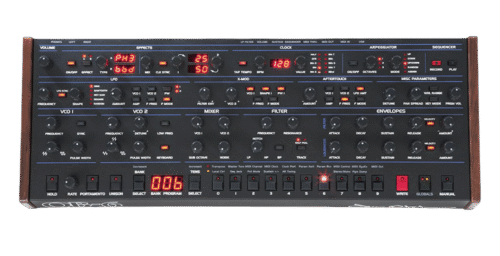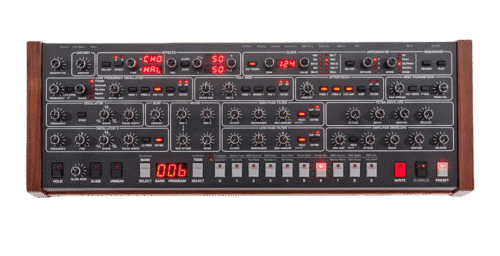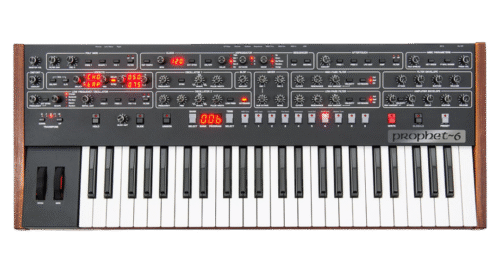


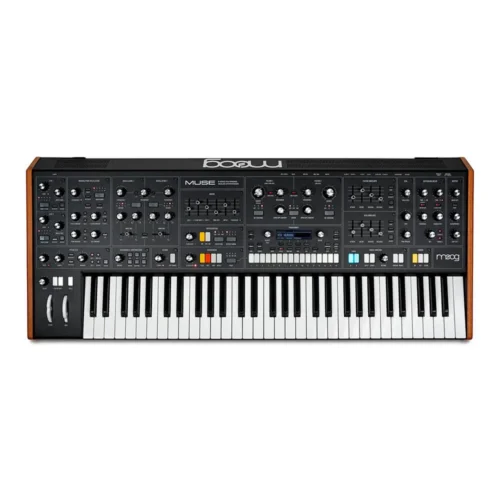
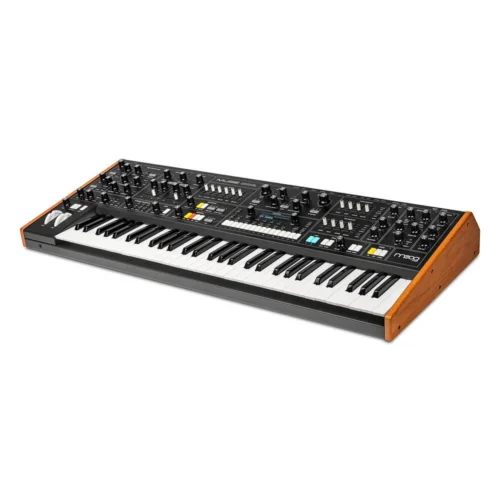
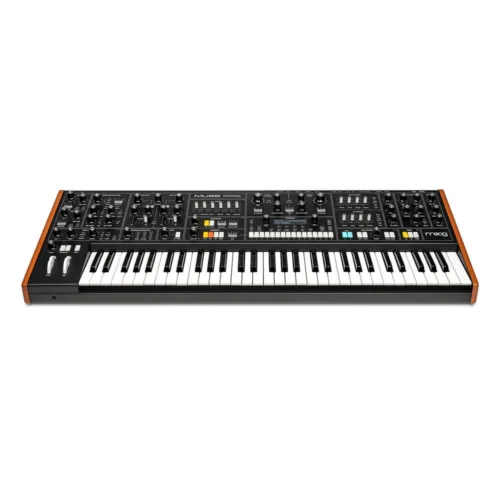


Moog Muse 8-voice Bitimbral Polyphonic Analog Synthesizer
Product Highlights
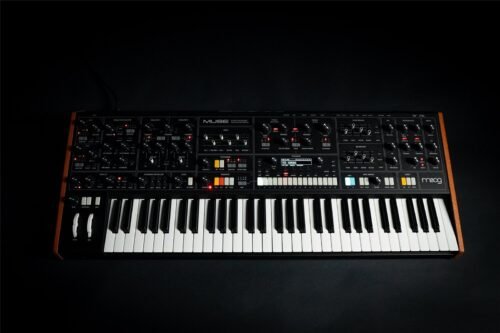
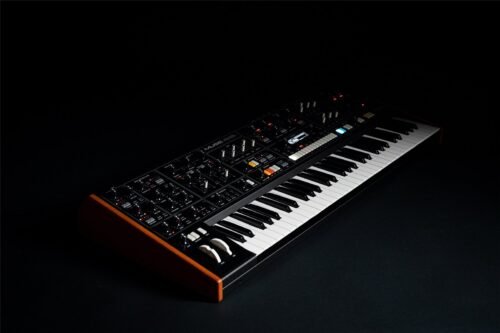
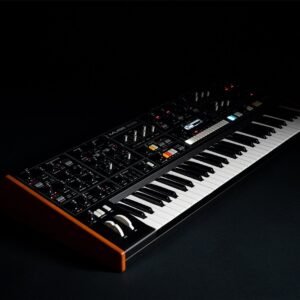
- Moog Muse has 61 keys, and the semi-weighted full-size Fatar keybed has velocity and channel after.
- Diffusion Delay is a mesmerising stereo processor inspired by golden period vintage digital rack delays with diffusing multi-tap behaviour.
- Dual analogue VCOs per voice adapted from Minimoog Voyager circuits, featuring wave mixing and programmable analogue FM.
- The per-voice analogue modulation oscillator has pre-routed destinations and may function as a third audio oscillator at audio rates. It has 16 banks of 16 patches, totalling 256 patch memory. Muse ships with 224, leaving two banks for user patching.
- There are 16 banks of 16 sequences, totalling 256. Muse comes with 224, one for each of the factory patches and two sequence banks allocated for the user.
Experience unparalleled sonic depth and versatility with the Moog Muse 8-voice Polyphonic Analog Synthesizer, delivering rich, authentic analog tones through its dual Moog Transistor Ladder Filters. Its 8-voice polyphony combined with an expressive weighted keyboard featuring aftertouch and velocity sensitivity allows for dynamic, intricate performances. Explore advanced sound design possibilities with the 16-slot modulation matrix and extensive control options that invite creativity at every turn.
Original price was: ₹431,300.₹409,900Current price is: ₹409,900.
In stock
In stock
Classic Moog Potency Restores Polyphonic Prowess
The Moog Muse is a trademark of the current polysynth scene, known for its vintage aesthetics and tonal depth. It features an 8-voice bitimbral functioning, dual-sound innovation, and a variety of timbral settings per stage. The Muse has 61 full-size semi-weighted keys, two voltage-controlled oscillators, and an all-analogue signal path. It also includes twin back-panel CV I/O, a powerful sequencing station, chord memory, and a Programmer OLED browser.
Prepared to express, ready to execute.
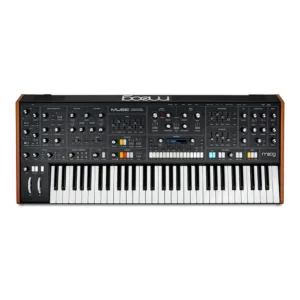
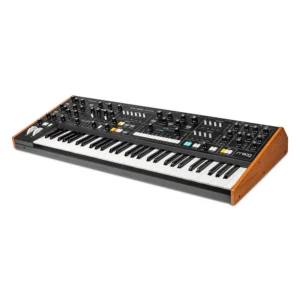
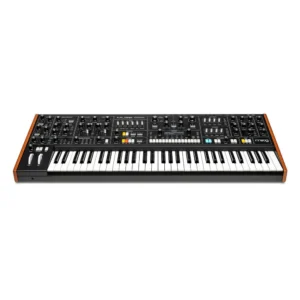
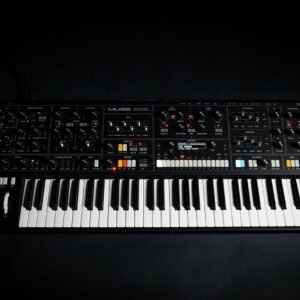
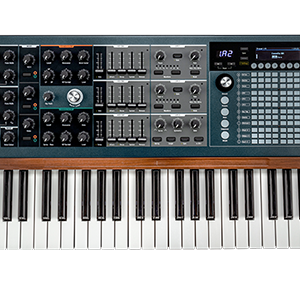
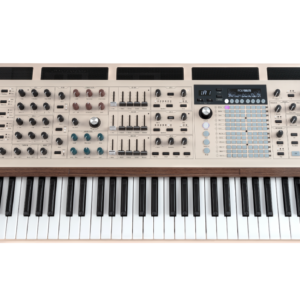
A first glance at the Moog Muse reveals the anticipated appearance of previous Moog marvels, all linked together by a straightforward operating structure, on-the-spot controls, per-function knobs, and unique menus for sound customization. The Muse’s performance-friendly design is built on 61 full-size, semi-weighted keys with velocity and aftertouch. It also has Pitch and Mod wheels, a Macro knob, an Octave switch, and a Hold switch for smooth dynamic operation. It’s all topped off by a vintage yet startlingly modern Moog-style chassis that will delight even the most ardent synthesists, from vintage-gear enthusiasts to complicated sound explorers with flexible workflows. Regardless of your playing style, the Moog Muse offers extensive expressive possibilities for stage or studio performances.
Beautiful dual-oscillator design in true analog flair.
The Moog Muse’s rich, mouldable sound potential comes from two classic voltage-controlled oscillators, each of which has adjustable triangle/sawtooth and varied pulse wave settings. Exploration with the Octave, Frequency, Wave Mix, FM Routing, and Hard Sync knobs allows for a wide range of tone options, from tight, basic squares to composite texture mixes. Furthermore, the Muse’s built-in mixer ups the ante by providing separate level control over both oscillators, the modulation oscillator, and extra Noise and Ring Mod controls, thus expanding harmonic options tenfold. Would you like to go all-original? By bypassing the Muse’s digital delay, you get a 100% clean analog signal route that showcases your works with full instrumental authenticity.
Idolise masterful Moog modulation
In addition to its two onboard LFOs, the Moog Muse’s dedicated voltage-controlled modulation oscillator engine opens up a whole new realm of creative routing possibilities, allowing you to manipulate pitch, envelopes, random generation, and much more. The per-voice, per-patch, and sound-shaping options are essentially endless, ranging from gently chorused soundscapes to complicated effects dynamics and beyond, with everything fully routable on the mod map via 16 modulation slots. Furthermore, with five configurable waveforms (sine, sawtooth, reverse sawtooth, square, and noise) and a comprehensive range of modulation settings on board, defining the exact behaviors of the modulation oscillator to match your sounds is a breeze.
Shape iconic tones, both ancient and contemporary.
The Moog Muse is a contemporary Moog instrument featuring twin filters, envelopes, and a voltage-controlled amplifier. It features transistor ladder-style filters with highpass and lowpass modes, KB Tracking, Envelope Amount, linked operation, and routing settings for generating new and old Moog tones. Twin ADSR envelopes with configurable stage curves, multi-trig, loop, and velocity provide an extensive shaping palette for creating key stabs, pads, and engaging effects. The Muse’s tonal compositions are completed by an analog amplifier with Volume, Pan Position, and Pan Spread controls.
Not sure where to begin? The Muse’s Programmer OLED browser exposes 16 different sound banks, 14 of which are preset with factory-made patches like pads, basses, arpeggios, effects, and much more. With 16 distinct patches in each bank, the Muse has 256 preset slots where you may create, alter, and save your favorite musical creations for later use.
Proprietary Moog Muse Diffusion Delay.
Moog’s internal Diffusion Delay signal processor emulates the behavior of old-school antique digital rack delays, resulting in completely unexpected — but welcomed — stereo and spatial effects. Independent Time-L, Time-R, Feedback, Character, and Mix controls, as well as delay-per-timbre options, collaborate via the Moog Muse’s onboard clock or external device clock to move into the form of ping-pong-style jumps, ethereal echoes, and just about any other bobbing delay effect that comes to mind.
Onboard arpeggiator and sequencer engines that can be modified
The Moog Muse’s arpeggiator engine, which can be operated via built-in clock controls or an external clock input, has front-panel Direction (forward/backward) and Octave Range controls for on-the-fly travel. Further investigation in the Muse’s Programmer exposes buildable rhythms, gate length control, and probability settings enabling a wide range of percussive and melodic compositions. The synth’s sequencer engine supports 16-, 32-, 48-, and 64-step sequences and has Play, Record, Advance, and Reset controls. Of course, accessing the sequencer through the Programmer panel gives you more flexibility over gate duration and velocity, as well as the ability to save sequences for later use with any factory or user-created preset.
In sync on stage or in the studio.
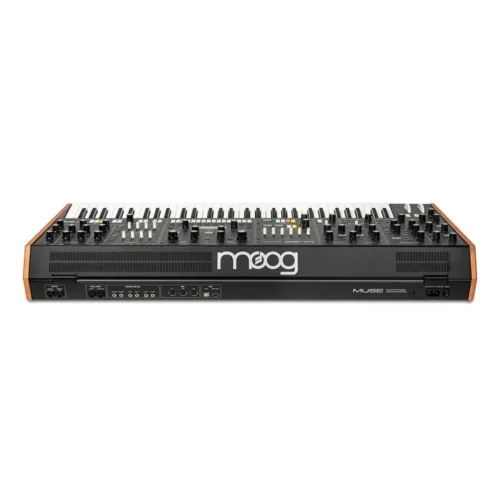
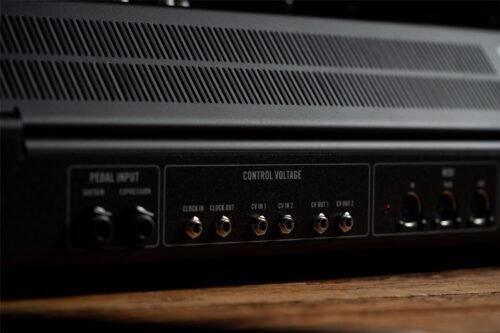
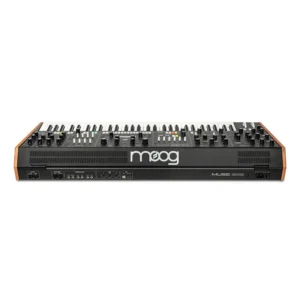
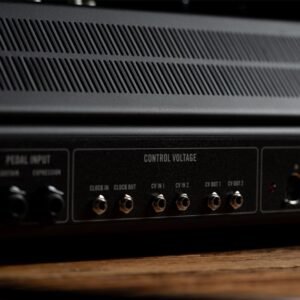
From extensive stage performances to expressive play in the studio, the Moog Muse’s innovative back-panel connectors provide tight integration into any performance venue. Two control voltage inputs and outputs, as well as an analog clock CV input and output, allow for flexible integration with a variety of existing rigs and studio equipment. Similarly, USB and 5-pin interfaces (In, Thru, and Out) enable both current and classic MIDI systems, with an extra USB-A host port for system control and data backup. Output may be accessible via two back-panel main output connectors or a handy front-facing stereo headphone out; both employ the Muse’s front-panel volume and Low Cut output controls to stay completely dialed in regardless of your playing circumstances.
Born from real Moog tradition.
The Moog synthesizer, introduced in 1964, was a pioneer in sound design. In the mid-1970s, Moog sought polyphonic voicing solutions. Founder Robert Moog collaborated with artists Wendy Carlos and David Luce to create the Polymoog, the first polysynth. The Polymoog was released in 1975, marking the company’s historic entry into multi-voice design. Over the years, Moog and his team made significant breakthroughs in polyphonic design, including the Memorymoog in 1982 and the Moog One (2018). The Moog Muse, bred with the same attention to study, passion, and commitment, is ready to nurture creativity.
Moog Muse Features:
- The 8-voice bitimbral analog synthesizer, Moog’s fourth polysynth, is the result of years of study and design, surpassing current engineering criteria.
- Â 61 full-size semi-weighted keys with velocity and aftertouch for sound expressiveness.
- Â Pitch and Mod wheels, Macro knob, Keyboard Octave switch, Hold switch, and assignable pedal functions enhance performance control.
- Voltage-controlled oscillators with changeable triangle/sawtooth mix and variable-width pulse wave control, programmable through FM Routing, Ring Modulation, and Hard Sync control.
- Â The voltage-controlled modulation oscillator offers a wide range of waveforms, including sine, sawtooth, reverse sawtooth, square, and noise, allowing for flexible behavior.
- Â Includes two fully loaded LFOs with customizable waveforms (triangle, sawtooth, square, sample-and-hold, and user-defined).
- Â The in-depth mixer offers fine-level control for both oscillators, modulation oscillators, and extra Noise and Ring Mod controls.
- Â The Moog Sound Sculptor features two classical transistor ladder filters (1 highpass/lowpass) with KB Tracking, Envelope Amount, and routing choices for current sound synthesis.
- Â Two ADSR envelopes with adjustable curves, multi-trig, and velocity control.
- Â Selectable glide types: LCR, LCT, and EXP.
- Â Supports mono/poly timbre voice count modes, including unison, detune, and voice theft.
- Use the Tap Tempo button to modify the clock rate in real time.
Specifications
- Â Sync clock via the back panel 1/8-in. clock input and output ports.
- The voltage-controlled amplifier has per-timbre Volume, Pan Position, and Pan Spread settings to add sonic breadth to any patch.
- Customizable arpeggiator engine with 16-, 32-, 48-, and 64-step sequencer with clock division and rhythmic programming features.
- Â The programmer OLED browser and preset panel have 256 patch slots (224 factory presets).
- Â Includes Moog Diffusion Delay signal processor with Delay Time Left, Delay Time Right, Feedback, Character, Mix, and Bypass options.
- The 16-slot modulation map includes controller and transform functions.
- Â Controls for master and headphones volume output, including low-cut EQ.
- 5-pin MIDI In, Out, and Thru with USB control.
- 1/8-inch TS CV input and output.
- Bypassing digital effects, the signal route remains 100% analog.
For musicians and sound designers seeking unparalleled analog warmth combined with modern versatility, the Moog Muse 8-voice Bitimbral Polyphonic Analog Synthesizer offers a compelling solution. This instrument is designed to deliver rich, expressive tones with the flexibility to create complex, layered sounds that inspire creativity in both studio and live settings. Whether you are crafting lush pads, cutting leads, or intricate sequences, the Muse provides the tools necessary to elevate your sonic palette.
At the heart of the Muse lies its 8-voice polyphony with bitimbral capability, meaning you can play two distinct sounds simultaneously. This allows for greater textural complexity and live performance richness, as you can layer or split sounds across the keyboard. The full-size, weighted keys with velocity sensitivity and aftertouch respond dynamically to your playing nuances, enabling expressive performances that convey emotion and subtlety. The inclusion of a pitch wheel, mod wheel, macro knob, octave switch, and hold switch further expands your control over the sound, making it easy to manipulate parameters in real-time without breaking your flow.
Sound generation is purely analog, featuring two analog VCOs per voice that produce classic waveforms including sine, sawtooth, reverse sawtooth, square, and noise. This provides a broad sonic foundation for everything from vintage-style tones to modern experimental sounds. Dual Moog transistor ladder filters refine the output with the iconic Moog warmth and punch, while two ADSR envelopes and two LFOs, including a dedicated pitch LFO, give you precise control over modulation and dynamics. A 16-slot modulation matrix per timbre per patch allows for intricate routing, enabling you to design evolving sounds that respond to your playing or external inputs.
The Muse also includes a 64-step sequencer with 16 banks of 16 sequences, alongside a pre-timbre arpeggiator, giving you powerful tools for creating rhythmic patterns and complex musical phrases. These features make it an excellent choice for electronic musicians wanting to build tracks live or in the studio. Connectivity is comprehensive: stereo 1/4″ TRS audio outputs, headphone output, MIDI In/Out/Thru and USB, plus pedal inputs for sustain and expression, allow seamless integration with other gear. Additionally, clock inputs/outputs and CV inputs/outputs provide compatibility with modular and other analog systems, expanding your creative possibilities.
Physically, the Muse synthesizer is built for professional use with a sturdy chassis and an intuitive layout featuring 44 knobs, 16 sliders, and 129 buttons, all complemented by an OLED display for clear visual feedback. It runs on a standard IEC AC power input with universal voltage support (100 to 240 VAC, 50/60 Hz), making it suitable for use worldwide. The combination of robust build quality and extensive control options ensures this instrument can handle the demands of both touring musicians and studio producers.
Whether you are a seasoned synthesist looking to expand your arsenal with an authentic Moog analog voice or a producer wanting a versatile instrument capable of complex layering and modulation, the Muse 8-voice Bitimbral Polyphonic Analog Synthesizer meets those needs. Its blend of classic sound generation, rich polyphony, and advanced performance features makes it a powerful creative tool. With its competitive pricing and feature set, the Muse offers excellent value for those serious about their sound.
In summary, the Moog Muse 8-voice synthesizer stands out as a deeply expressive and flexible instrument that empowers musicians to explore new sonic territories. Its combination of authentic analog sound, extensive real-time control, and modern sequencing capabilities provide a platform for creative expression that can elevate any musical project. Invest in the Muse to experience the distinctive Moog sound and advanced functionality that will inspire your music for years to come.
Does the Moog Muse 8-voice synthesizer support both USB and traditional MIDI connections?
What kind of keyboard does the Moog Muse have, and does it support velocity and aftertouch?
Can I sequence and layer multiple sounds simultaneously on the Moog Muse?
What types of outputs and inputs does the Moog Muse offer for connecting to other gear?
How is the Moog Muse shipped, and what is the expected delivery timeframe?
Are there any special care instructions to maintain the analog components of the Moog Muse?
Does the Moog Muse 8-voice synthesizer support both USB and traditional MIDI connections?
What kind of keyboard does the Moog Muse have, and does it support velocity and aftertouch?
Can I sequence and layer multiple sounds simultaneously on the Moog Muse?
What types of outputs and inputs does the Moog Muse offer for connecting to other gear?
How is the Moog Muse shipped, and what is the expected delivery timeframe?
Are there any special care instructions to maintain the analog components of the Moog Muse?
Does the Moog Muse 8-voice synthesizer support both USB and traditional MIDI connections?
What kind of keyboard does the Moog Muse have, and does it support velocity and aftertouch?
Can I sequence and layer multiple sounds simultaneously on the Moog Muse?
What types of outputs and inputs does the Moog Muse offer for connecting to other gear?
How is the Moog Muse shipped, and what is the expected delivery timeframe?
Are there any special care instructions to maintain the analog components of the Moog Muse?
Does the Moog Muse 8-voice synthesizer support both USB and traditional MIDI connections?
What kind of keyboard does the Moog Muse have, and does it support velocity and aftertouch?
Can I sequence and layer multiple sounds simultaneously on the Moog Muse?
What types of outputs and inputs does the Moog Muse offer for connecting to other gear?
How is the Moog Muse shipped, and what is the expected delivery timeframe?
Are there any special care instructions to maintain the analog components of the Moog Muse?
Does the Moog Muse 8-voice synthesizer support both USB and traditional MIDI connections?
What kind of keyboard does the Moog Muse have, and does it support velocity and aftertouch?
Can I sequence and layer multiple sounds simultaneously on the Moog Muse?
What types of outputs and inputs does the Moog Muse offer for connecting to other gear?
How is the Moog Muse shipped, and what is the expected delivery timeframe?
Are there any special care instructions to maintain the analog components of the Moog Muse?
Does the Moog Muse 8-voice synthesizer support both USB and traditional MIDI connections?
What kind of keyboard does the Moog Muse have, and does it support velocity and aftertouch?
Can I sequence and layer multiple sounds simultaneously on the Moog Muse?
What types of outputs and inputs does the Moog Muse offer for connecting to other gear?
How is the Moog Muse shipped, and what is the expected delivery timeframe?
Are there any special care instructions to maintain the analog components of the Moog Muse?
Does the Moog Muse 8-voice synthesizer support both USB and traditional MIDI connections?
What kind of keyboard does the Moog Muse have, and does it support velocity and aftertouch?
Can I sequence and layer multiple sounds simultaneously on the Moog Muse?
What types of outputs and inputs does the Moog Muse offer for connecting to other gear?
How is the Moog Muse shipped, and what is the expected delivery timeframe?
Are there any special care instructions to maintain the analog components of the Moog Muse?
Does the Moog Muse 8-voice synthesizer support both USB and traditional MIDI connections?
What kind of keyboard does the Moog Muse have, and does it support velocity and aftertouch?
Can I sequence and layer multiple sounds simultaneously on the Moog Muse?
What types of outputs and inputs does the Moog Muse offer for connecting to other gear?
How is the Moog Muse shipped, and what is the expected delivery timeframe?
Are there any special care instructions to maintain the analog components of the Moog Muse?
| Sound Generation | Analog |
|---|---|
| Type of Keys | Full-size, Weighted |
| Aftertouch | Yes |
| VELOCITY SENSITIVE | Yes |
| Other Controllers | Pitch Wheel, Mod wheel, Macro Knob, Octave Switch, Hold Switch, 44 x Knobs, 16 x Sliders, 129 x Buttons |
| Polyphony | 8-voice |
| Waveforms | Sine, Sawtooth, Reverse Sawtooth, Square, Noise |
| LFO | 2 x LFO, Pitch LFO |
| Oscillators | 2 x Analog VCO (triangle, sawtooth) |
| Filter | 2 x Moog Transistor Ladder Filters |
| Envelope Generator | 2 x ADSR |
| Arpeggiator | Yes, Pre-timbre |
| Sequencer | 64-step, 16 Banks of 16 Sequences |
| Audio Outputs | 2 x 1/4" TRS (left, right) |
| Headphones | 1 x 1/4" TRS |
| USB | 1 x Type B, 1 x Type A |
| MIDI I/O | In/Out/Thru/USB |
| Pedal Inputs | 1 x 1/4" TRS (sustain), 1 x 1/4" TRS (expression) |
| Other I/O | 2 x 1/8" TS (clock in, out), 4 x 1/8" TS CV (in, out) |
| Mod Matrix | 16-slot (per timbre per patch) |
| Power Source | Standard IEC AC Input |
| Features | OLED Display |
| AC Input Power | 100 to 240 VAC, 50 / 60 Hz |