


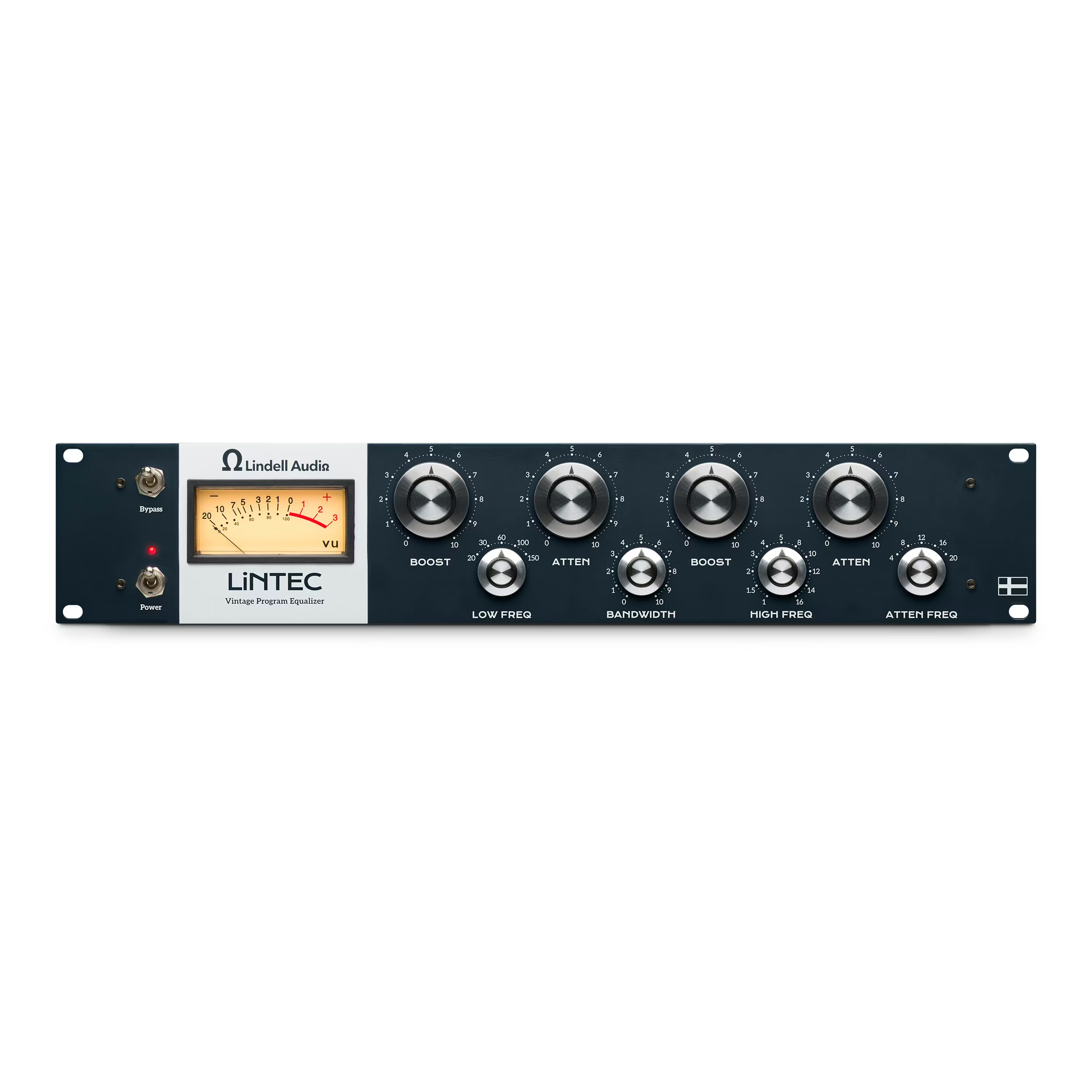
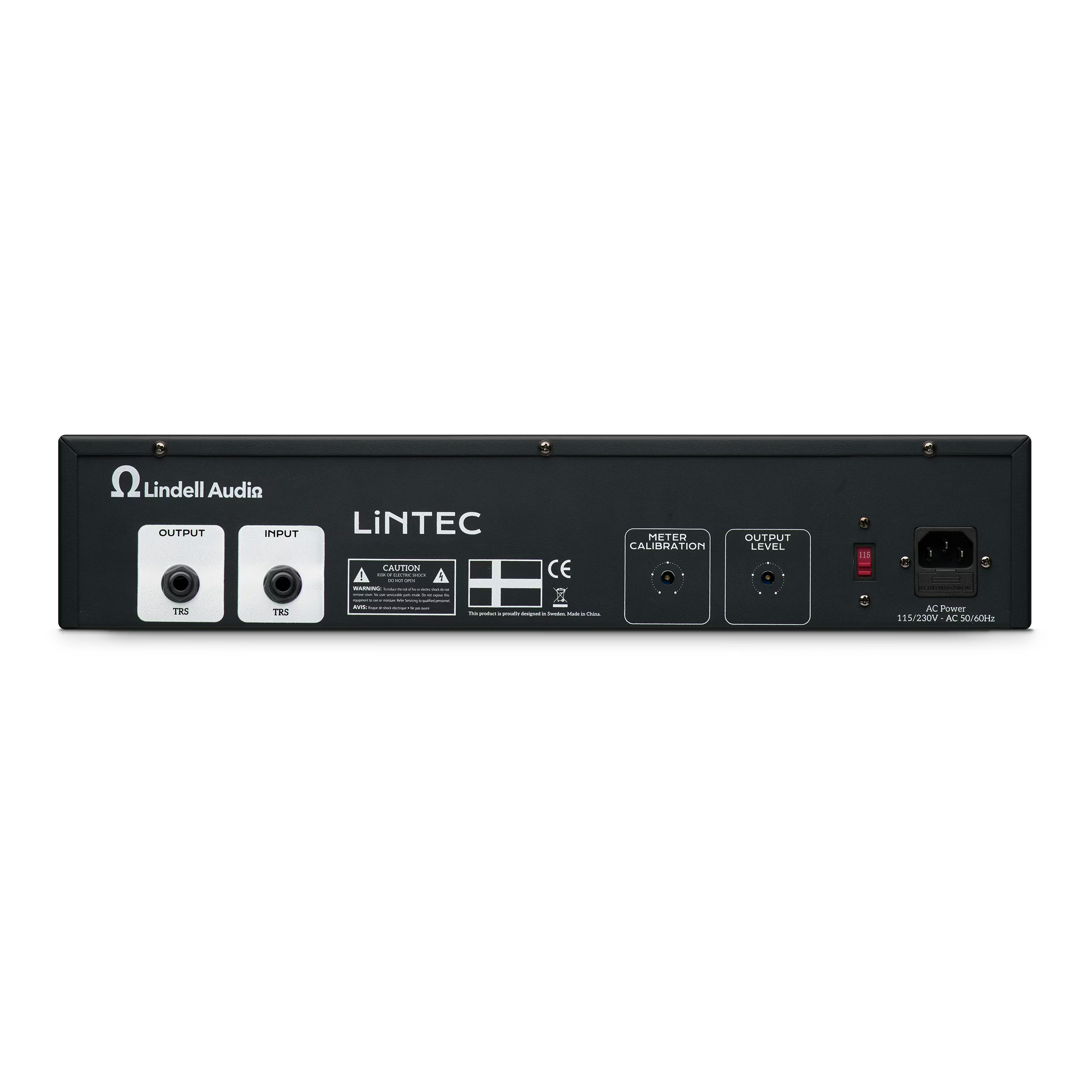
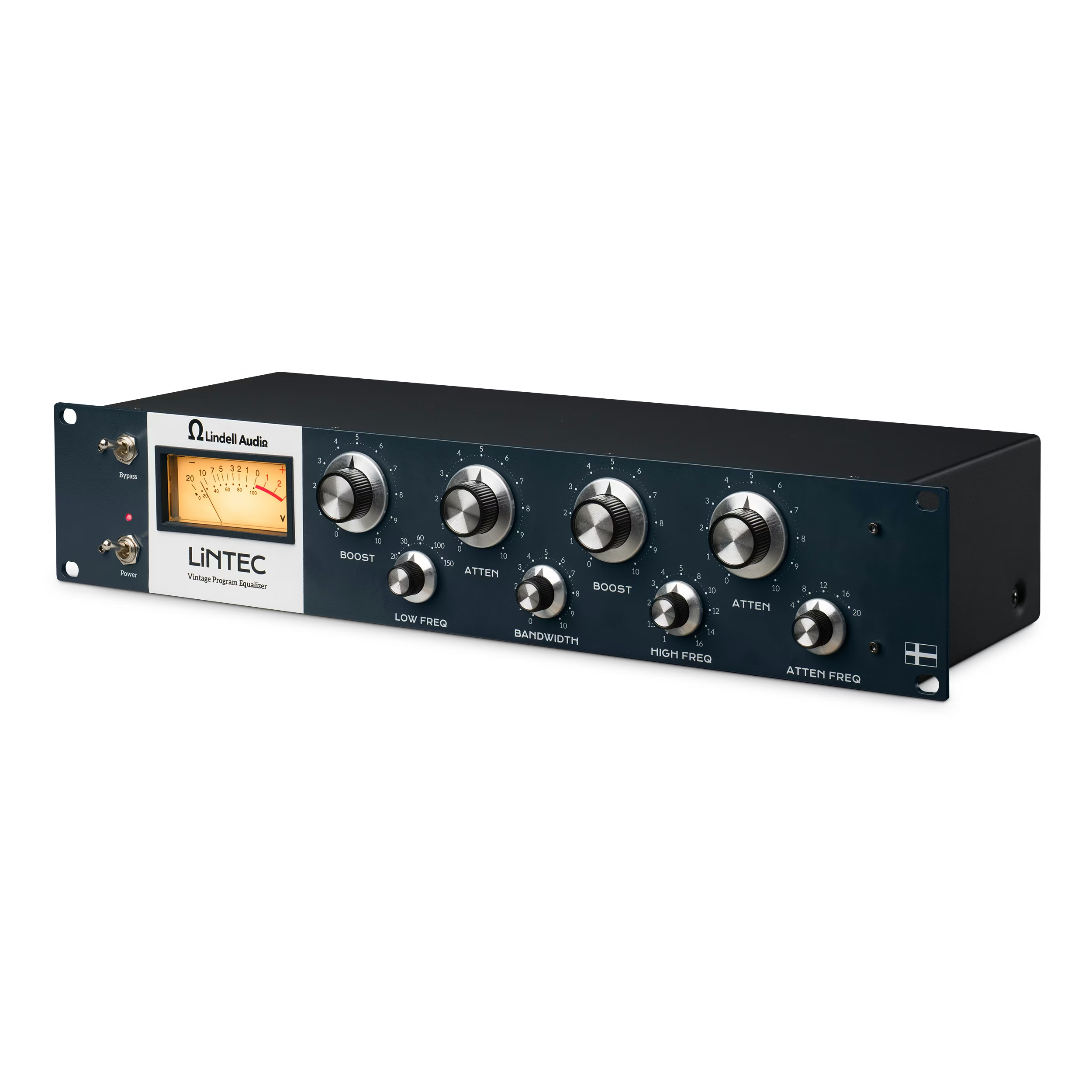
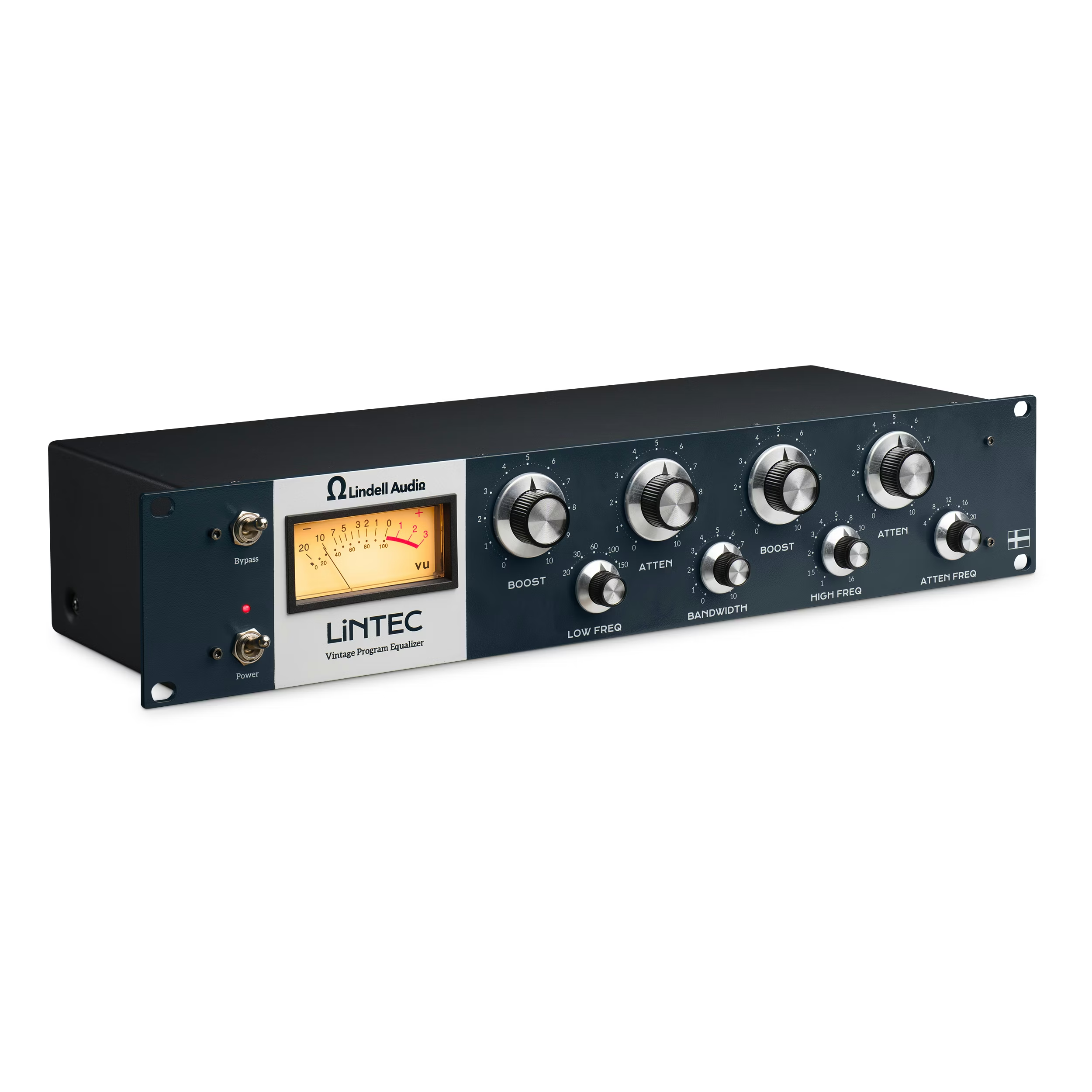
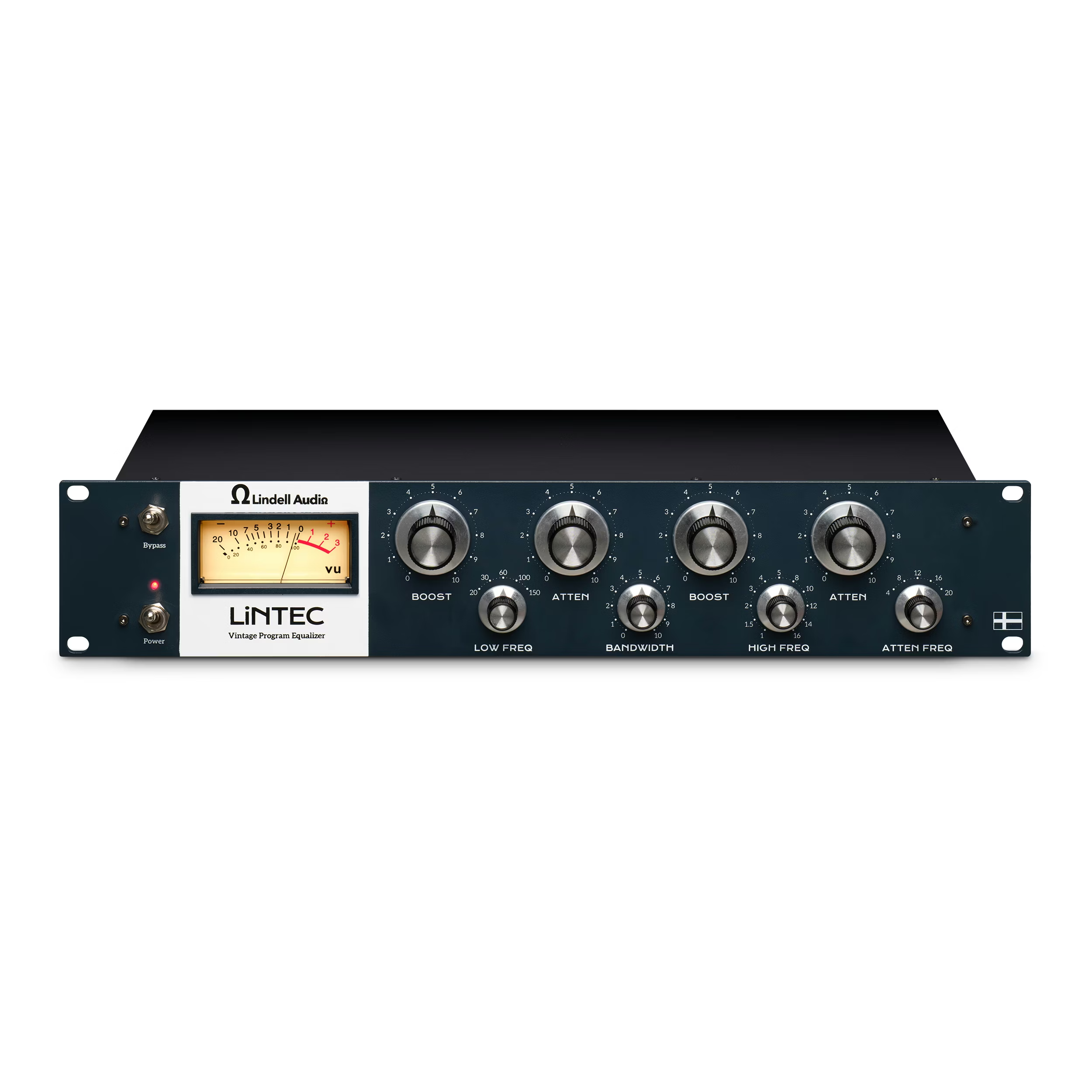


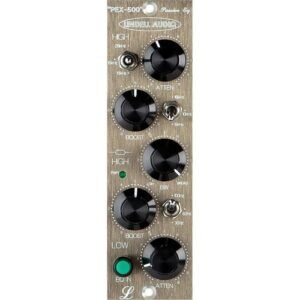
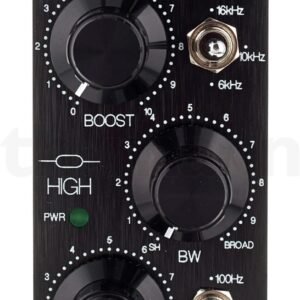
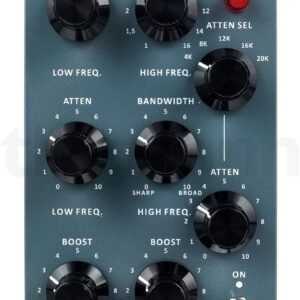
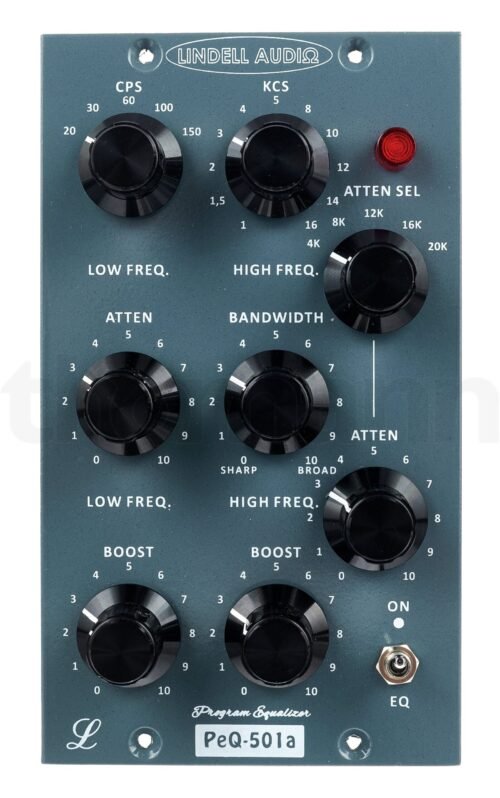
Air on vocals, weight on kick and bass, warmth on the whole mix – the Pultec way. The Lindell Audio LiNTEC is a rack-mount program equalizer based on the classic EQP1A filters, with Lindell’s own gain structure. It brings the most famous studio EQ workflow to your rack, hands-on.
Why customers choose it
Who it is for
Mixing and mastering engineers, studios that want hardware tone on vocals, strings, kick, bass and buses, and producers moving away from software EQs.
Specifications
| Type | Solid-state program equalizer, rack mount |
|---|---|
| Low frequency boost / attenuation | 20, 30, 60, 100, 150 Hz (±10%), 5-step |
| High frequency boost | 1, 1.5, 2, 3, 4, 5, 6, 10, 12, 14, 16 kHz (±10%), 11-step |
| High frequency attenuation | 4, 8, 12, 16, 20 kHz (±10%), 5-step |
| Gain | Up to 40 dB ±1 dB |
| Op-amp | OPA1731 |
| Transformers | Custom-designed for Lindell Audio |
| Mains voltage | 115 V / 230 V AC, switchable on rear panel |
| Power inlet | IEC320-C14 |
| Dimensions | 438 mm (19″) W x 88 mm (2U) H x 250 mm D |
| Rack Size | 2U, 19-inch |
Good to know
- Fits a standard 19-inch rack, 2 rack units high.
- Set the rear-panel voltage switch to 230 V for Indian mains before powering on.
- One channel; buy two for stereo – they are hand-matched within ¼ dB.
FAQ
What is the Pultec low-end trick?
Pick a low frequency (start at 100 Hz) and turn up both LF Boost and LF Attenuate. You get a boost below that frequency and a small cut just above it – more thump and body without mud.
Why solid-state and not tubes?
Lindell chose solid-state for faster transients, lower noise, better unit-to-unit matching and no tubes to replace.

 Talk to Suhavi
Reviews
There are no reviews yet.