



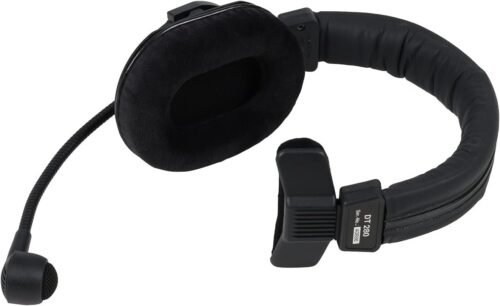
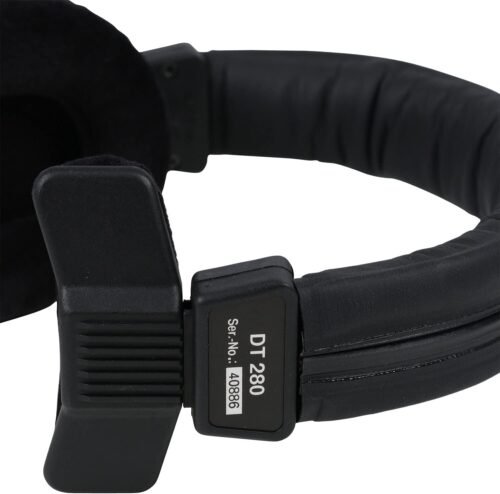
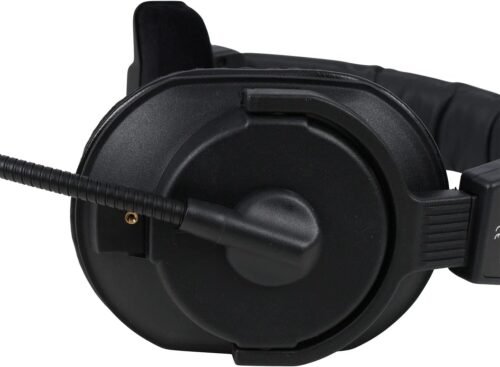
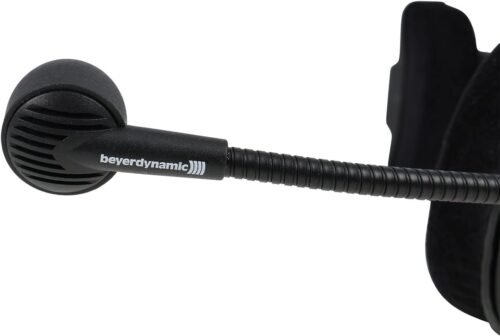
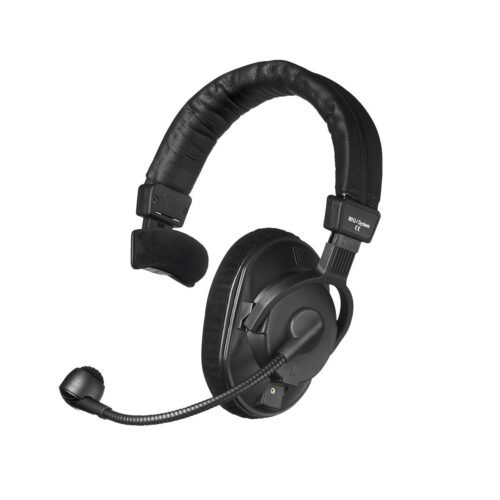
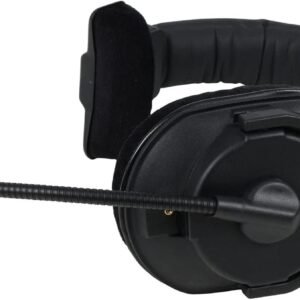
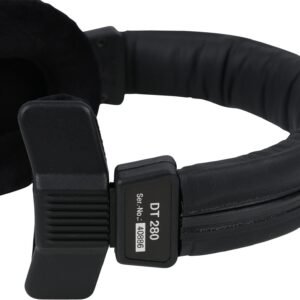
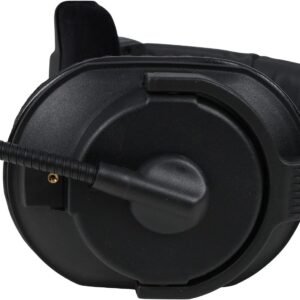
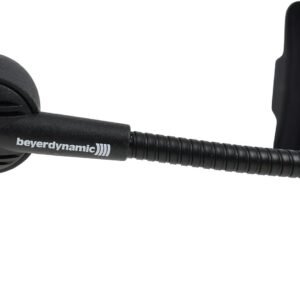
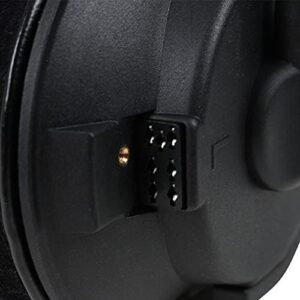
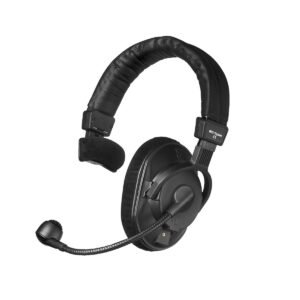





Hear the programme clearly and be heard clearly – even in a loud stadium or control room. The beyerdynamic DT 280 MKII 80 ohm is a lightweight, closed single-ear headset with a dynamic hypercardioid gooseneck microphone. It is built for broadcasting: on-air commentary, sportscasters, intercom and talkback systems.
Why customers choose it
Who it is for
TV and radio commentators, sports broadcasters, OB vans, live event and theatre intercom crews, church and conference production teams, and camera operators who need a robust headset with a reliable boom mic.
Specifications
| Type | Closed single-ear headset with dynamic microphone |
|---|---|
| Headphone impedance | 80 ohms per system |
| Headphone frequency response | 10 – 30,000 Hz |
| Nominal SPL | 100 dB SPL at 1 mW (1 kHz) |
| T.H.D. | < 0.2% |
| Power rating | 100 mW |
| Pressure on ears | 4.5 N |
| Weight | 170 g without cable |
| Microphone | Dynamic, hypercardioid |
| Mic frequency response | 40 – 12,000 Hz |
| Mic output | approx. 1.3 mV/Pa at 5 cm |
| Mic impedance | 200 ohms |
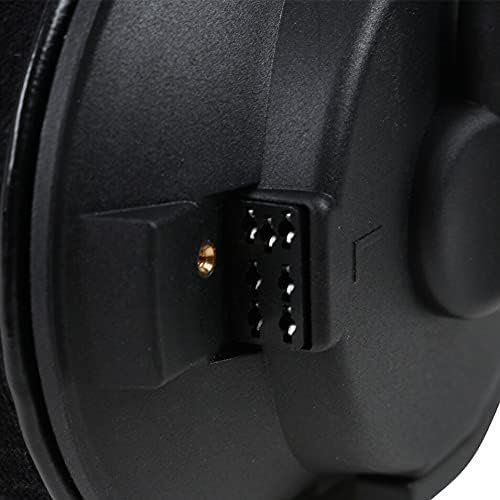
| Cable | Single-sided, detachable (not included) |
| Wearing Style | Over-ear, single ear |
Good to know
- The headset is supplied without a connecting cable. Choose the cable for your system: K 190.00 (open ends), K 190.40 (3-pin XLR male + 6.35 mm jack) or K 190.41 (5-pin XLR male).
- The microphone is dynamic, so it does not need phantom power.
- The two-ear version of this headset is the DT 290 MKII; both come in 80 and 250 ohm.
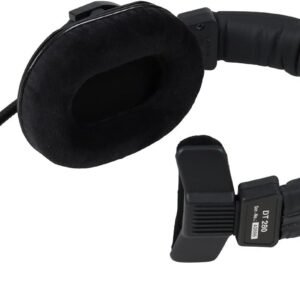
- Replacement ear pads: EDT 250 V (velour) or EDT 250 S (soft PVC).
FAQ
Which cable do I need?
It depends on your mixer, intercom or camera. For a mixer with XLR mic input and a headphone jack, beyerdynamic offers the K 190.40; for 5-pin XLR systems the K 190.41.
80 or 250 ohm?
Both have the same sound and microphone. Pick the impedance your intercom or broadcast system is designed for.





 Talk to Suhavi
Reviews
There are no reviews yet.