


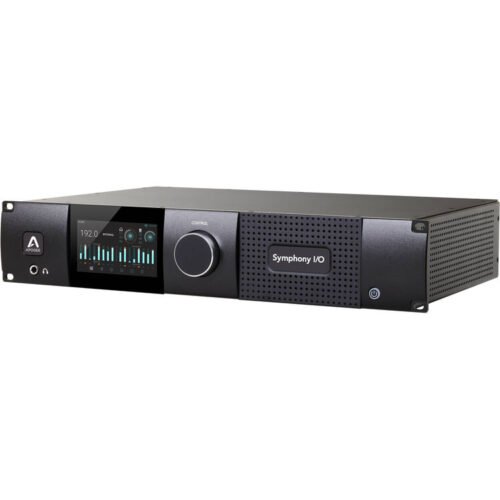
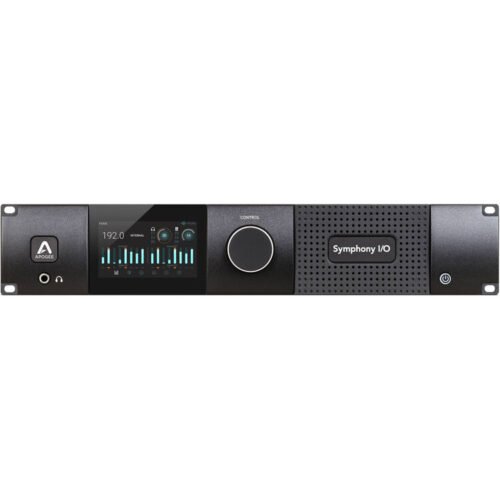
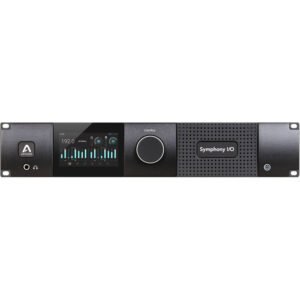




Apogee’s flagship conversion, built around your studio. The Apogee Symphony I/O Mk II SYM2-TB3 is a modular multichannel audio interface with Thunderbolt 3 connectivity (chassis only). Symphony I/O Mk II takes up to 32 channels of analog I/O per chassis, with an intuitive touchscreen – made for recording, mixing and mastering at the highest level.
Why customers choose it
Who it is for
Studios that want to build a custom Symphony I/O Mk II, replace a chassis, or move existing Mk II modules to a new connectivity option.
What’s in the box
- Symphony I/O Mk II chassis
- 3-pin IEC power cable
- Quick Start Guide
- Warranty booklet
Specifications
| Model / configuration | SYM2-TB3 |
|---|---|
| Platform | Apogee Symphony I/O Mk II |
| Connectivity | Thunderbolt 3 |
| I/O modules | none (chassis only – add I/O modules) |
| Max input / output level | +24 dBu (+4 setting) / up to +24 dBu |
| Headphone output | 1 x 1/4″ stereo, front panel, Constant Current Drive |
| Front panel | Touchscreen, control knob, power button |
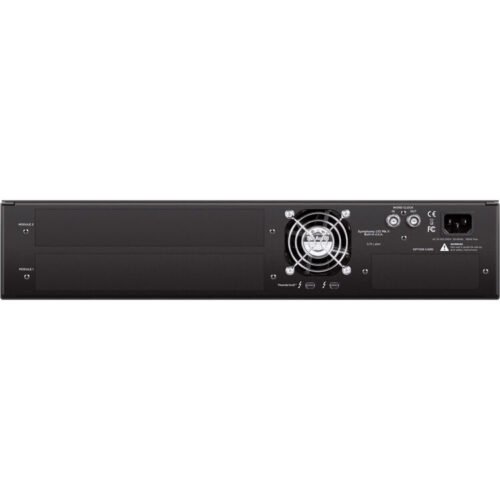
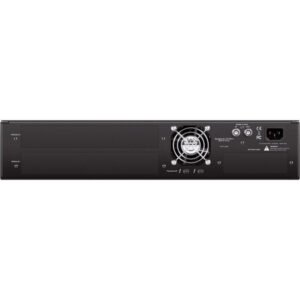
| Rear panel | 2 module slots, option card slot, word clock I/O, AC power |
| Compatibility | Mac only (macOS 10.10 and above) |
| Power | 90-240 VAC, 50-60 Hz, 150 W |
| Type | Audio interface chassis (no modules) |
Good to know
- No I/O modules are included – add Symphony Mk II modules (16×16 SE, Connect 8×8 MP and others) to get inputs and outputs.
- DB25 connections need DB25 snake cables (not included).
- Register with Apogee to download the Symphony Control software and firmware updates.
- Thunderbolt connection is Mac only.
FAQ
Can I change the modules later?
Yes. Symphony I/O Mk II has two module slots that take any combination of Mk II modules, plus an option card slot for other connectivity.
What is the difference between SE and non-SE modules?
SE modules are Apogee’s top-of-the-line Symphony modules: the 16×16 SE uses the ESS 9822pro A/D chip and an ultra-low distortion output driver.
Why Thunderbolt 3 and not Thunderbolt 4 or 5?
Apogee says audio does not need more bandwidth, so there is no performance difference between Thunderbolt 2, 3, 4 and 5.





 Talk to Suhavi
Reviews
There are no reviews yet.