₹299,705
In stock
In stock
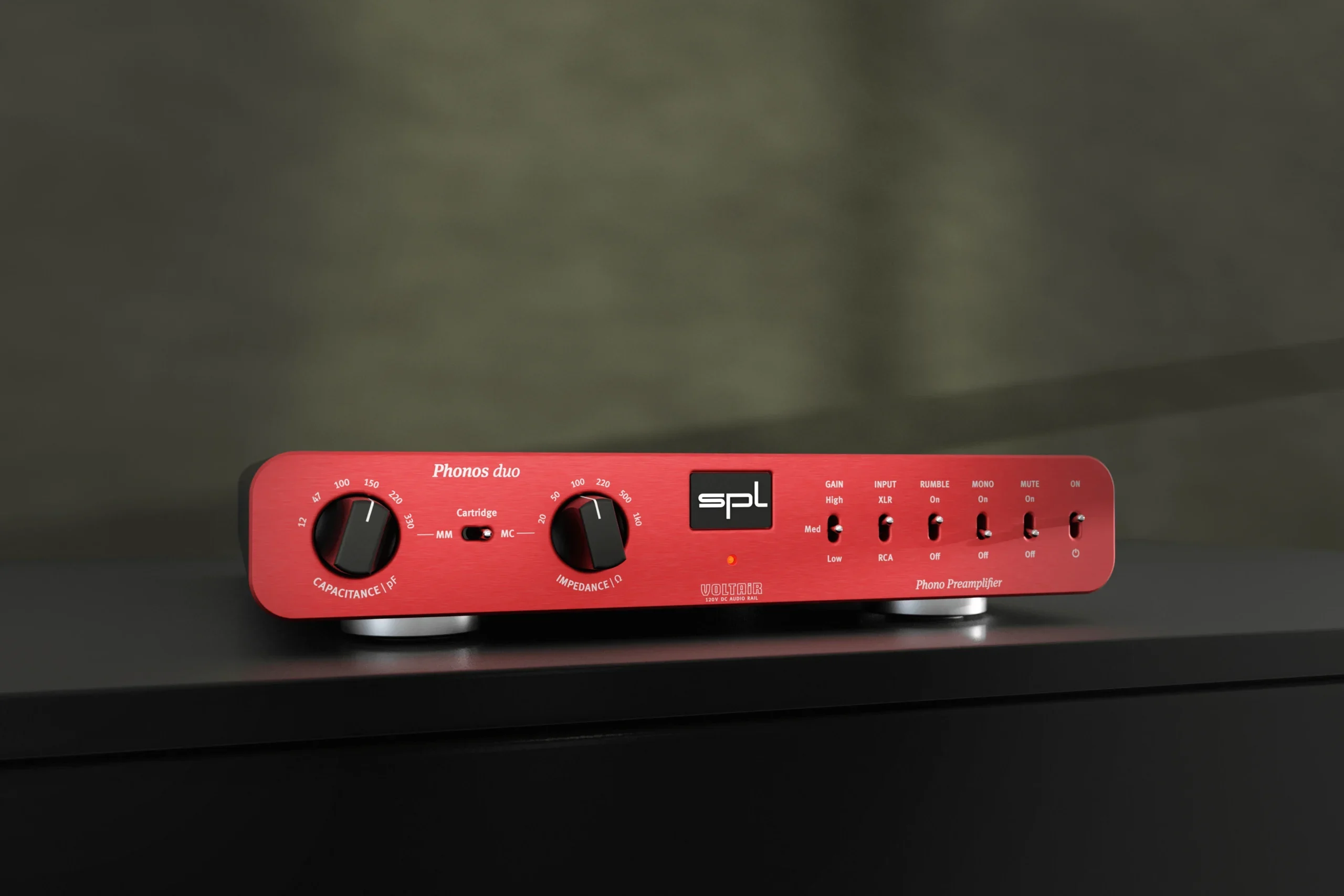
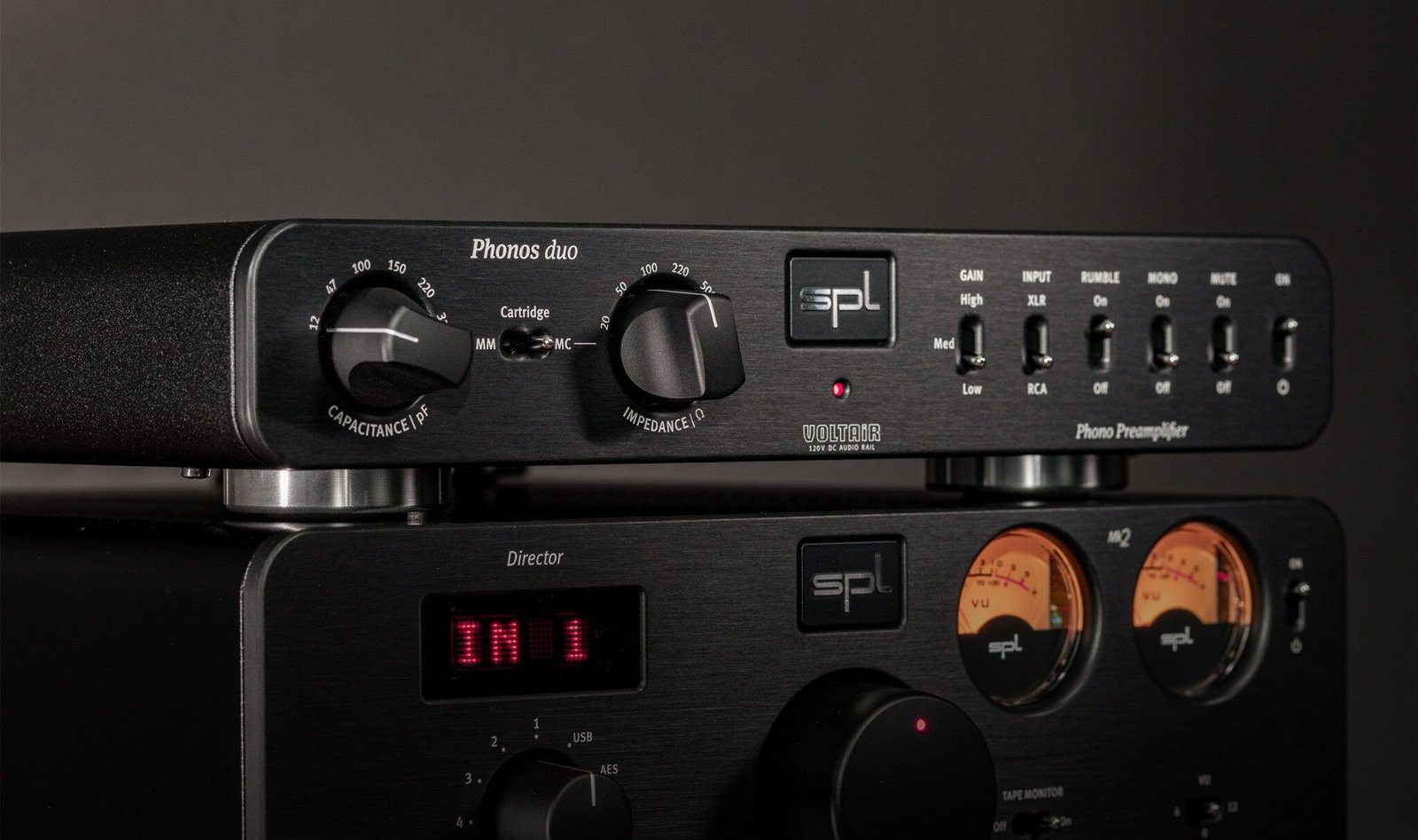
The SPL phono preamplifier Phonos duo expands the established
SPL phono preamplifier Phonos with a pair of balanced stereo inputs and outputs.
Phonos duo is thus even more versatile.
The RIAA Phono Preamplifier – Twice as nice
The SPL phono preamplifier Phonos duo expands the established
SPL phono preamplifier Phonos with a pair of balanced stereo inputs and outputs.
Phonos duo is thus even more versatile.
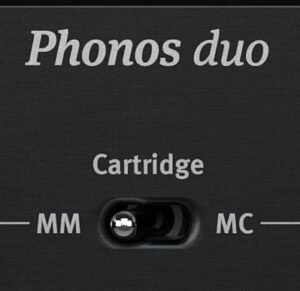
Whether moving magnet (MM) or moving coil (MC) cartridge systems –
the SPL VOLTAiR technology and the RIAA filter in the legendary Douglas-Self design
form the fundament for an outstanding phono sound.
Great design – a must have
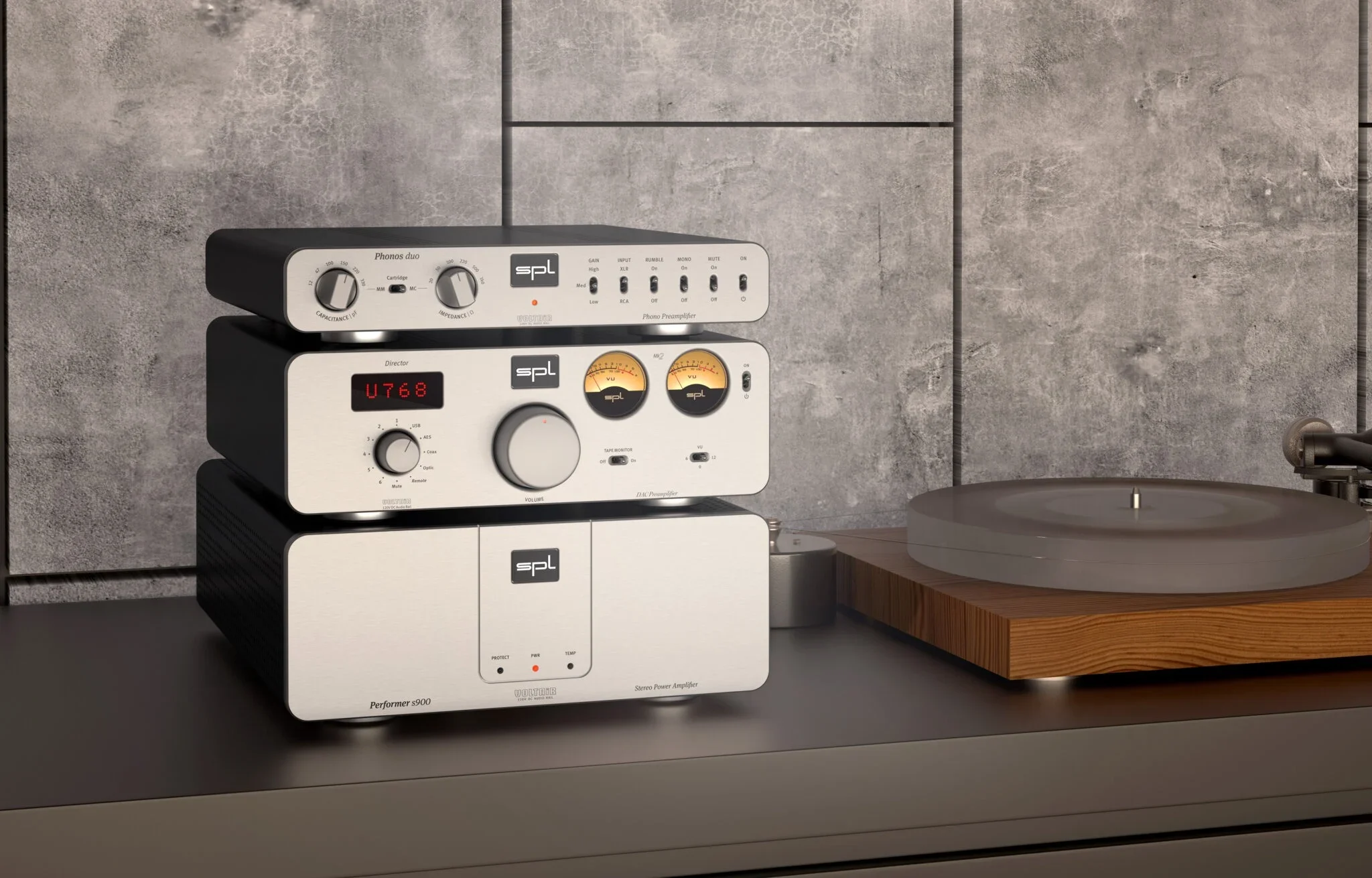
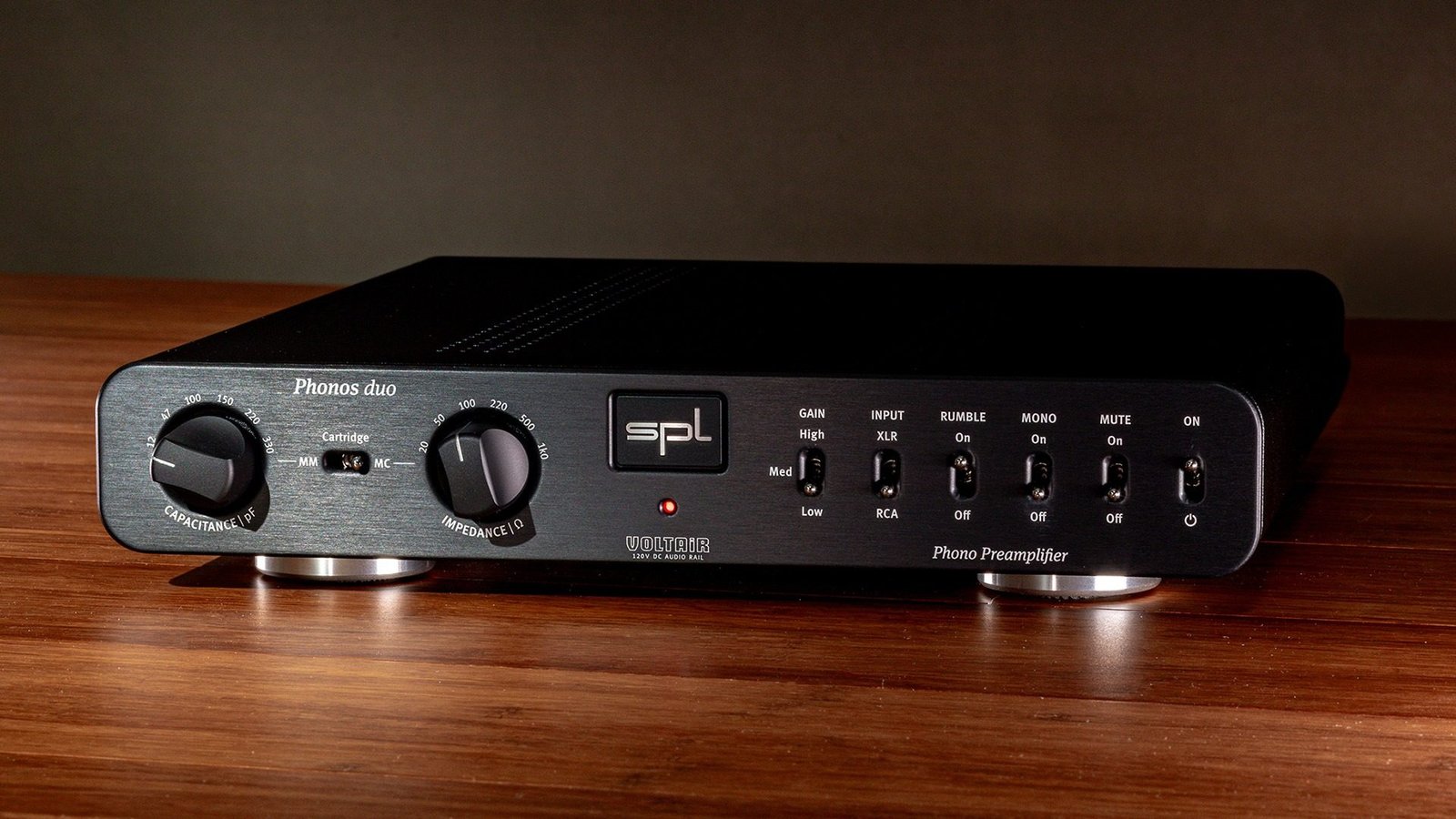
Visually, the SPL Phonos duo Phono Preamplifier fits perfectly into the SPL HiFi line
Professional Fidelity – and is of course available in the three basic colors black, red or silver.
MM & MC
There are two cartridge systems for turntables:
Moving Magnet (MM) and Moving Coil (MC).
Moving Magnet
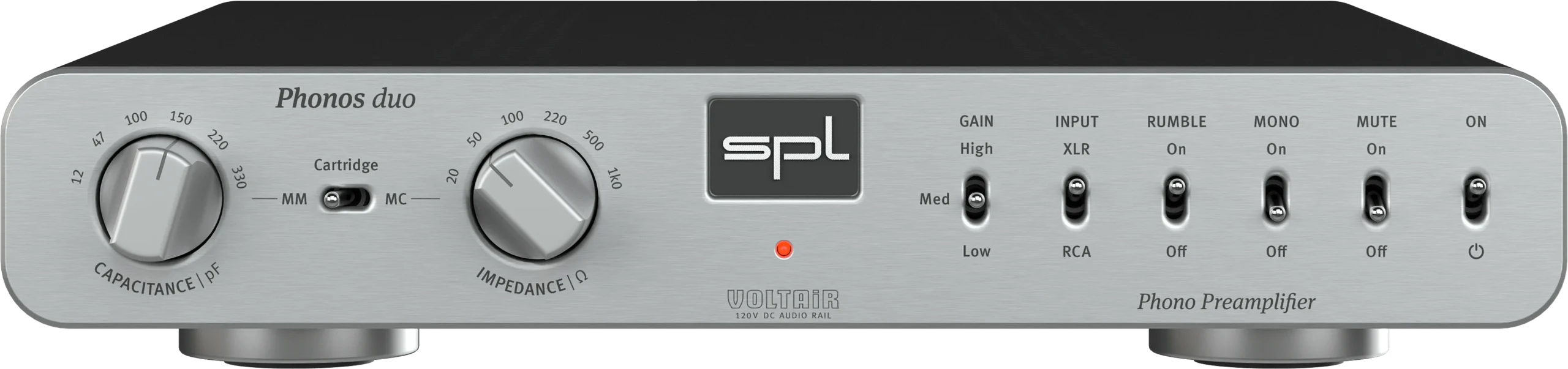
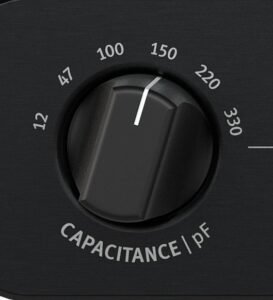
Moving magnet cartridges generate a voltage by moving a magnet between copper coils. In order to achieve the best possible linearity of the frequency and phase response, the capacitance is modified to adjust the cartridge.
Phonos duo offers six different capacities for this adjustment:
12 pF, 47 pF, 100 pF, 150 pF, 220 pF und 330pF.
MC or MM ?
Moving coil cartridge systems are commonly regarded as the more audiophile systems, as they allow a faster and therefore a finer cartridge due to their low mass. They bring out the finest nuances of the record. The output voltage of a moving coil cartridge system is extremely low at just a few hundred microvolts and is therefore more sensitive to noise and induced hum.
The very low output voltage makes preamplifier design a challenge, because it has to be pre-amplified extremely noise-free. With up to 70 dB preamplification, Phonos duo offers one of the most powerful phono preamplifiers for moving coil systems. Thanks to SPL 120V technology, Phonos duo amplifies extremely low-noise, linear and phase-locked.
Moving coil cartridges have a very low inductance and impedance.
This means that the effects of cable capacitance (from the cartridge to the preamplifier) are not that significant. The impedance, however, is the relevant parameter here and can be set in six positions on the Phonos duo. The manufacturers specify the impedances of the cartridges. These should be followed as closely as possible.
Moving magnet cartridges, on the other hand, are more rugged and often less expensive.
The greater mass of the moving magnets causes more inertia, which results in less precise reading
of the record. However, modern moving magnet systems also use neodymium magnets, which have
a significantly lower mass. Such moving magnet systems can also keep up with
some moving coil systems in terms of accuracy.
Capacitance plays a significant role with moving magnet cartridges.
This means that the effects of cable capacitance (from the cartridge to the preamplifier)
can‘t be ignored here. The capacity for moving magnet cartridges can therefore be set to six values
on the Phonos duo to be optimally adapted to the system.
Free choice – balanced or unbalanced
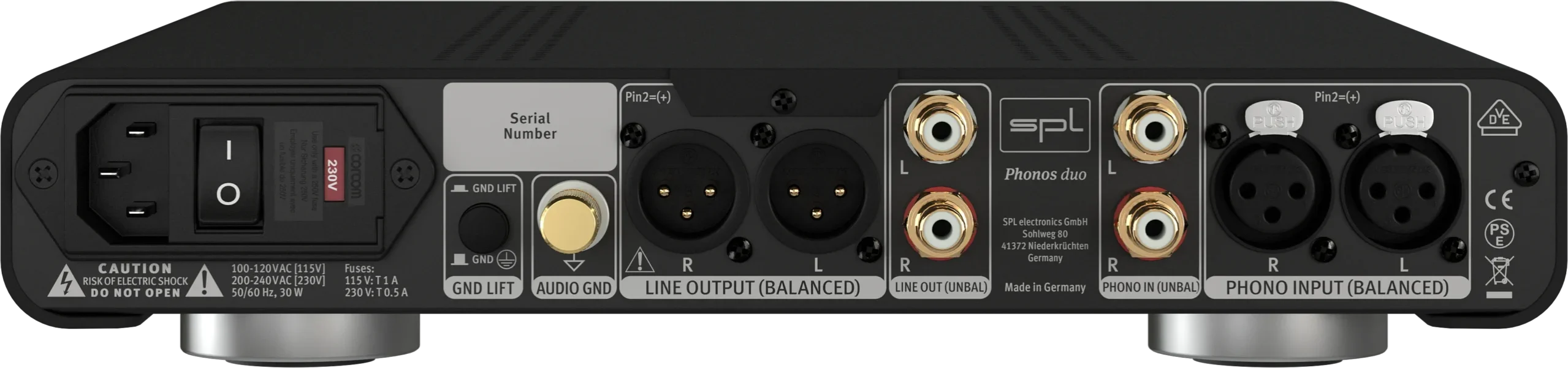
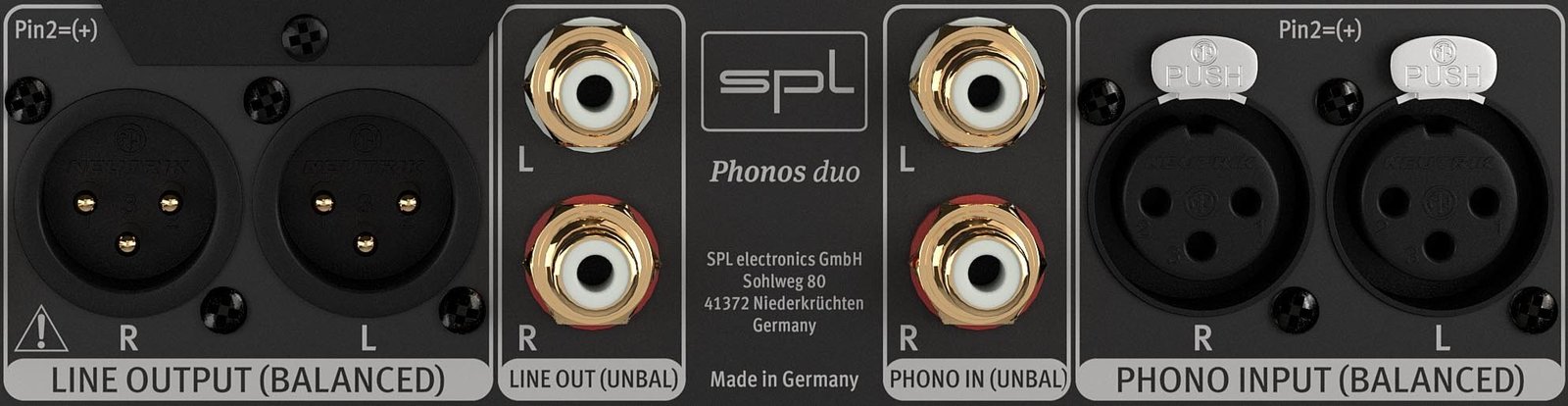
Phonos duo offers two pairs of stereo inputs and outputs.
A pair of balanced inputs and outputs with XLR inputs and outputs and a pair
of unbalanced inputs and outputs with RCA connectors.
The INPUT switch on the front of the Phonos duo can be used to switch between the two stereo inputs.
The output signal is always present in parallel at both output – regardless of the selected input.
Douglas Self Design
The RIAA equalization of the Phonos was developed according to the recommendations of Douglas Self.
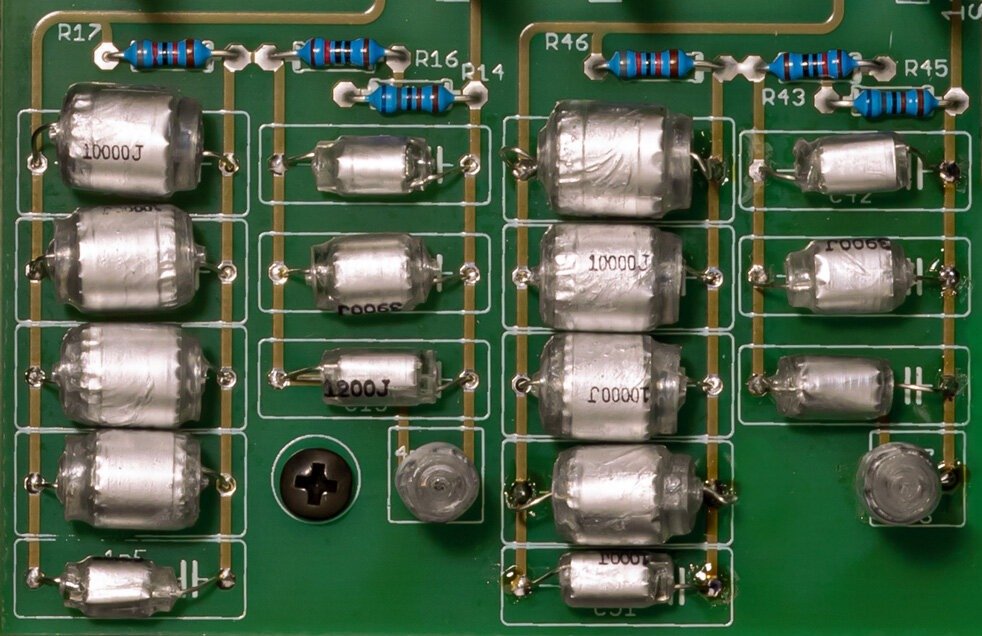
Idea: Many small capacities instead of a few large capacities.
Advantages: The capacitors charge and discharge faster, which results in better resolution and faster impulse response.
Only audiophile Styroflex capacitors are used in the entire RIAA equalizer.
About the person: Douglas Self is a British electronics engineer with a strong penchant for audio. He holds honorary degrees from Cambridge University and teaches psychoacoustics at the University of Sussex.
RIAA Equalization
RIAA equalization is a specification for the recording and playback of records proposed by the Recording Industry Association of America (RIAA).
The RIAA equalization curves introduced a global de facto industry standard for vinyl records in 1954.
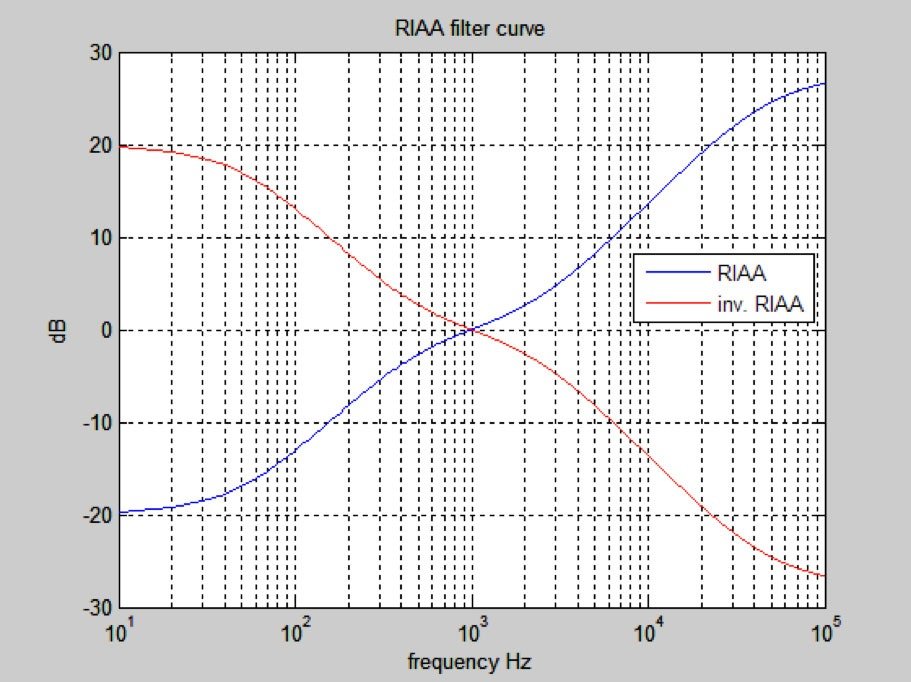
RIAA equalization uses pre-emphasis to reduce low frequencies and boost high frequencies when the record is cut (blue RIAA curve).
The bass is reduced by up to 20 dB to provide more space and longer record play time.
The high frequencies are boosted by up to 25 dB to increase the signal-to-noise ratio between the noise of the record media to the audio signal.
During playback, exactly the opposite happens in the Phonos. The de-emphasis filter (red RIAA curve) compensates for the pre-emphasis and the result
is a linear frequency response.
The VOLTAiR Technology
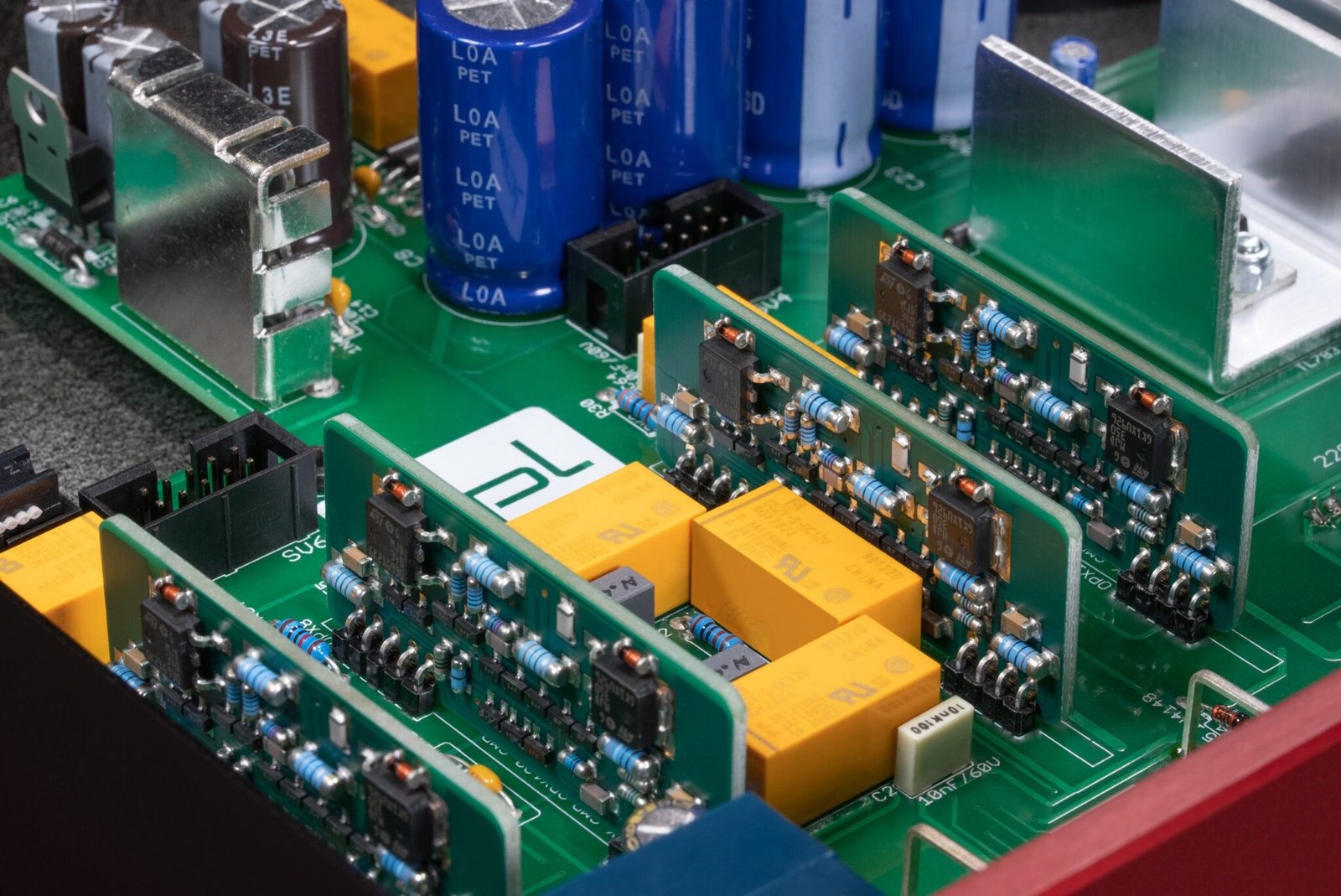
The 120V technology is our reference technology. The 120V technology is unique in the world. It operates at a DC voltage of 120 volts. This is four times that of IC-based semiconductor op-amps. In our Professional Fidelity series, we refer to this unsurpassed technology as VOLTAiR technology.
The highest possible audio quality requires the highest possible audio operating voltage.
The 120V technology works with +/-60 V. To be able to handle such a high voltage, we have developed special proprietary operational amplifiers that can operate with a DC voltage of +/-60 V: the SPL 120V SUPRA operational amplifiers. This high voltage would destroy conventional components and operational amplifiers.
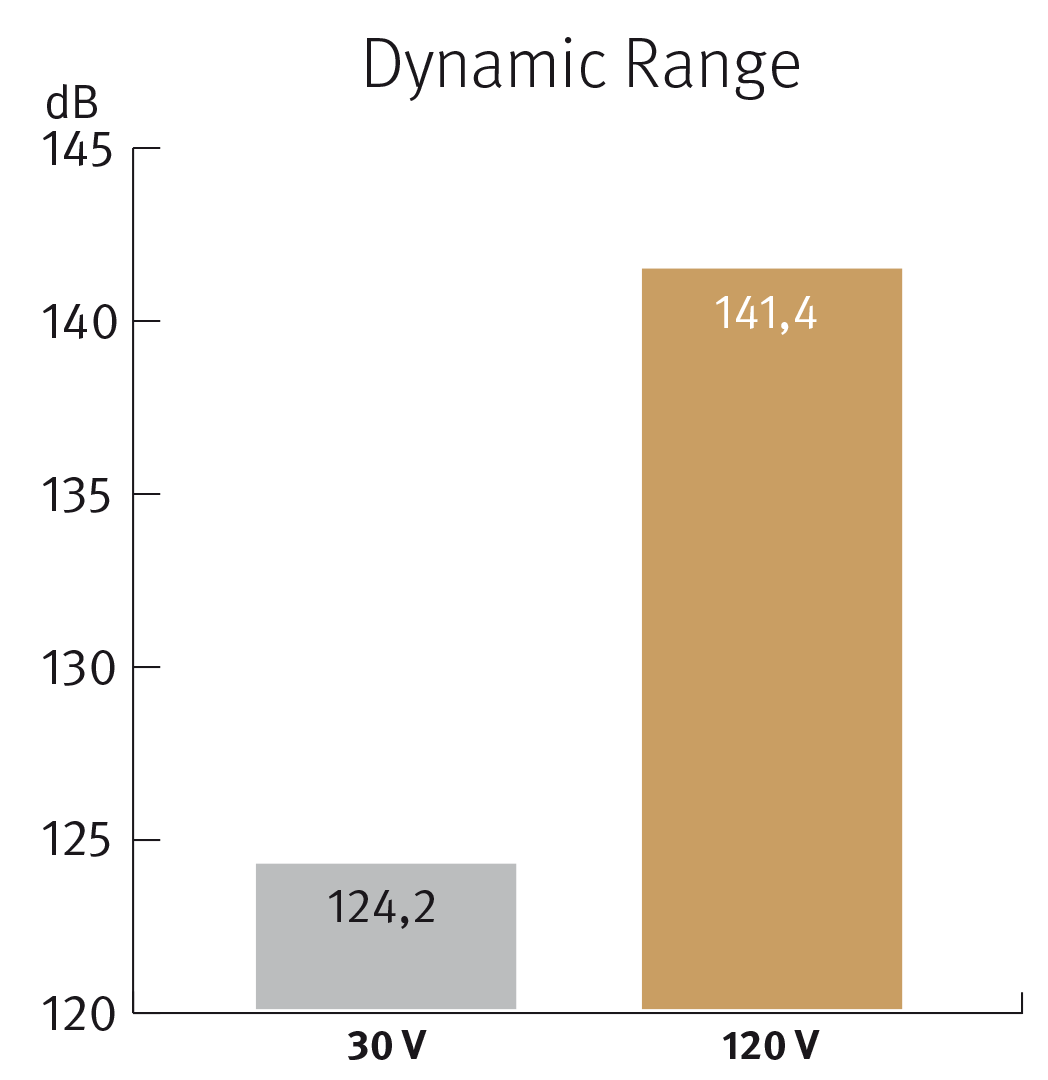
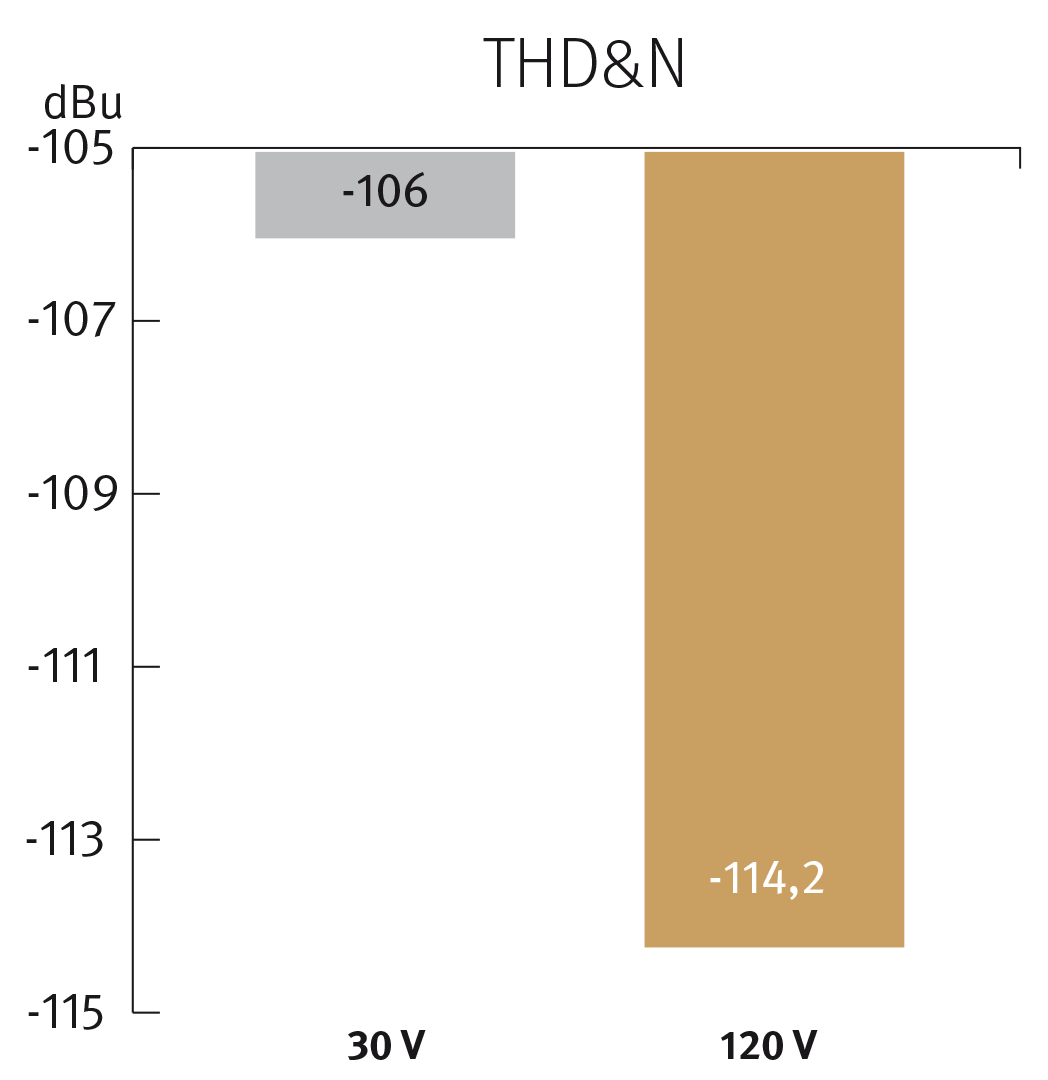
The 120V technology achieves exceptional technical specifications and sonic benefits. Technically, in terms of dynamic range, signal-to-noise ratio and headroom. Sonically, in terms of richness of detail and an absolutely relaxed listening experience.
By the way, the “120V” in the name of the technology has nothing to do with the local mains voltage from the mains power socket. This is about the operating voltage inside the device with which the audio signals are processed.
The mains voltage from the mains power socket is transformed to the required secondary voltage in the device’s internal linear power supply with toroidal transformer. Rectifiers convert this AC voltage into DC voltage required in the audio device.
Comparison
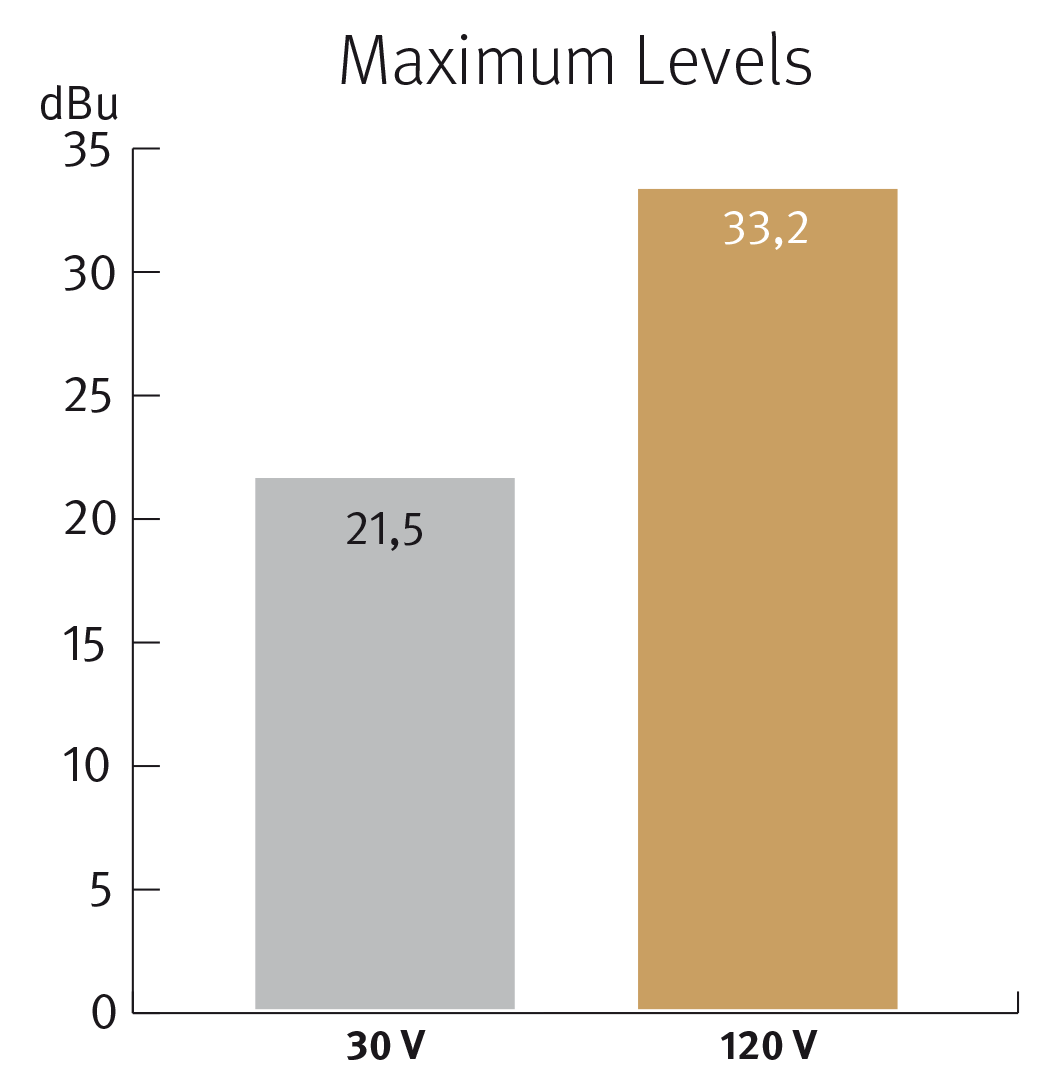
Most audio devices work with an internal operating voltage of +/-15 volts and can thus process a maximum input level of +21.5 dBu. If a DAC, for example, has an output level of +22 dBu at 0 dBFS, level peaks of the music material would already cause overloads in the input stage of the device. All components in the audio device often operate at their limits. The result is an unsteady sound that causes stress and faster ear fatigue.
SPL devices with VOLTAiR technology can handle input levels of +32.5 dBu thanks to the higher internal operating voltage of +/- 60 volts – thus offering 12 dB more headroom. All components consequently operate continuously in the optimum operating range. The result is a very pleasant, natural and relaxed sound experience. So you can enjoy your music in every detail.
These diagrams clearly show the superiority of the VOLTAiR technology in comparison to other circuits with lower, common operating voltages.
| Analog Input & Output: RCA | Input impedance (MM) : 47 kΩ |
|---|---|
| Moving Magnet (MM) Preamplifier | Amplification (Low) : 30 dB |
| Internal Linear Power Supply with Shielded Toroidal Transformer | Operating voltage for analog audio : +/- 60 V |
| Moving Coil (MC) Preamplifier | Amplification (Low) : 50 dB |
| Dimensions & Weight | W x H x D (width x height x depth) : 278 x 57 x 300 mm , 11 x 2.24 x 11.81 inch |
| Mains Power Supply | Mains voltage (selectable, see fuse chamber) : 230 V AC / 50; 115 V AC / 60 Hz |