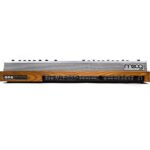
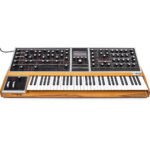
The Moog One is a high-end analog synthesizer designed to offer a wide range of creative possibilities and features. Here are some of its key specifications and features:
Voice Architecture:
- 16-voice polyphonic analog synthesizer.
- Each voice includes 3 newly-designed analog VCOs (Voltage-Controlled Oscillators) with selectable waveform mixing.
- Unison Mode allows for stacking up to 48 oscillators on a 16-voice instrument for massive sounds.
- 2 filters per voice, with filter mixing: 2x Multimode State Variable filters and a classic low pass/high pass Moog Ladder filter.
- 3 DAHDSR envelopes per voice, with user-definable curves for dynamic sound shaping.
Modulation and Effects:
- 4 assignable LFOs (Low-Frequency Oscillators) for modulation.
- Modulation Matrix for complex modulation assignments.
- Synth Effects and Master Bus Effects, including chorus, delay, phase, bit reduction, vocoding, and premium reverbs from Eventide®.
- Analog signal path with no in-line conversion when insert effects are off.
Sound Generation:
- Dual-source analog noise generator with selectable colors of noise and dedicated envelope.
- Mixer with volume controls and filter routing for each oscillator, noise generator, ring modulator, and external audio input.
- Hard sync, analog ring modulation, and FM capabilities for sound generation.
Keyboard and Controls:
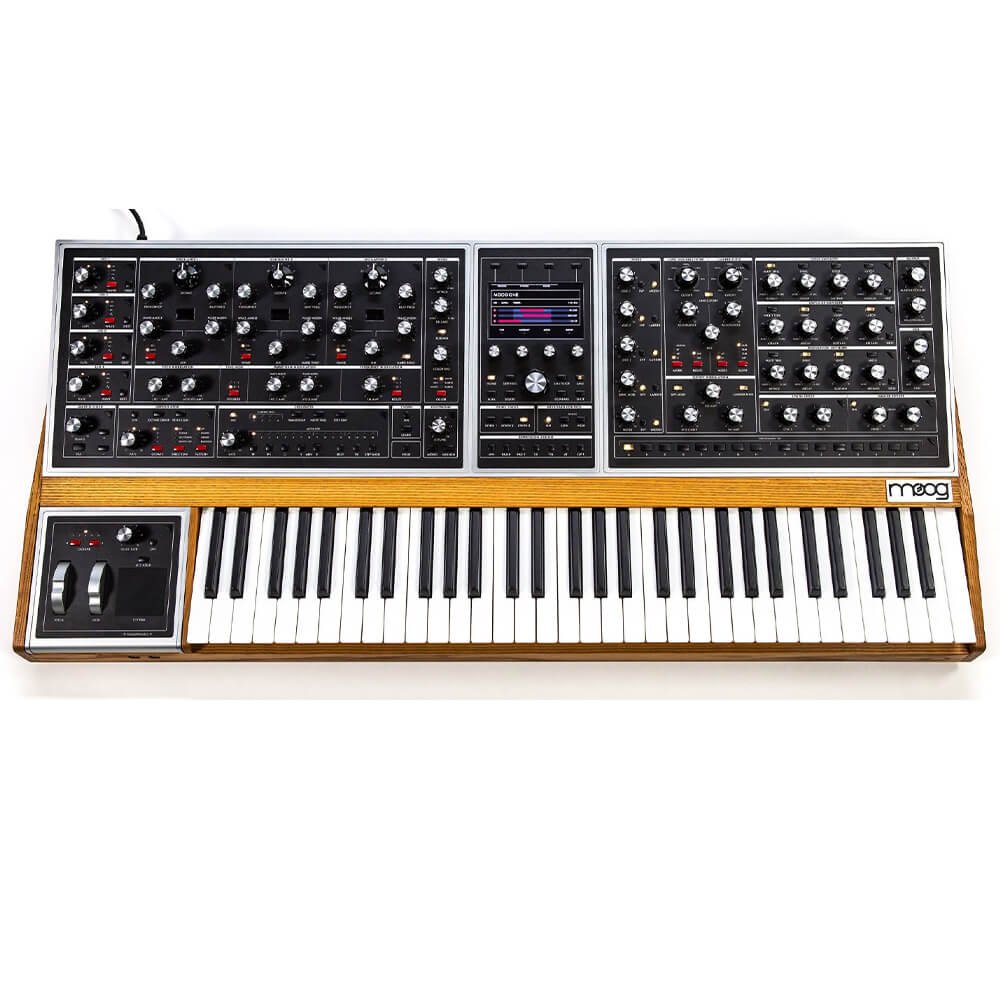
Premium 61-note Fatar TP-8S keyboard with velocity and aftertouch for expressive playing.
Pressure-sensitive X/Y pad for continuous control.
73 knobs and 144 buttons on the front panel for hands-on sound shaping.
OLED displays for visual feedback and parameter control.
“More” button for accessing additional parameters specific to each module.
Sequencing and Timbrality:
3-part multitimbrality, allowing voices to be split, layered, or stacked with up to 48 oscillators in Unison Mode.
Each synthesizer has its own step sequencer, arpeggiator, and effects processor.
Chord memory function for creating and recalling chords.
Presets and Performance:
- Tens of thousands of presets can be stored, categorized, edited, notated, and shared via USB drive.
- Performance Sets for quick access to up to 64 presets.
- Snapshot feature to capture and recall a time-stamped picture of a preset’s settings.
- User Spaces for saving global settings, MIDI configurations, and more.
Connectivity:
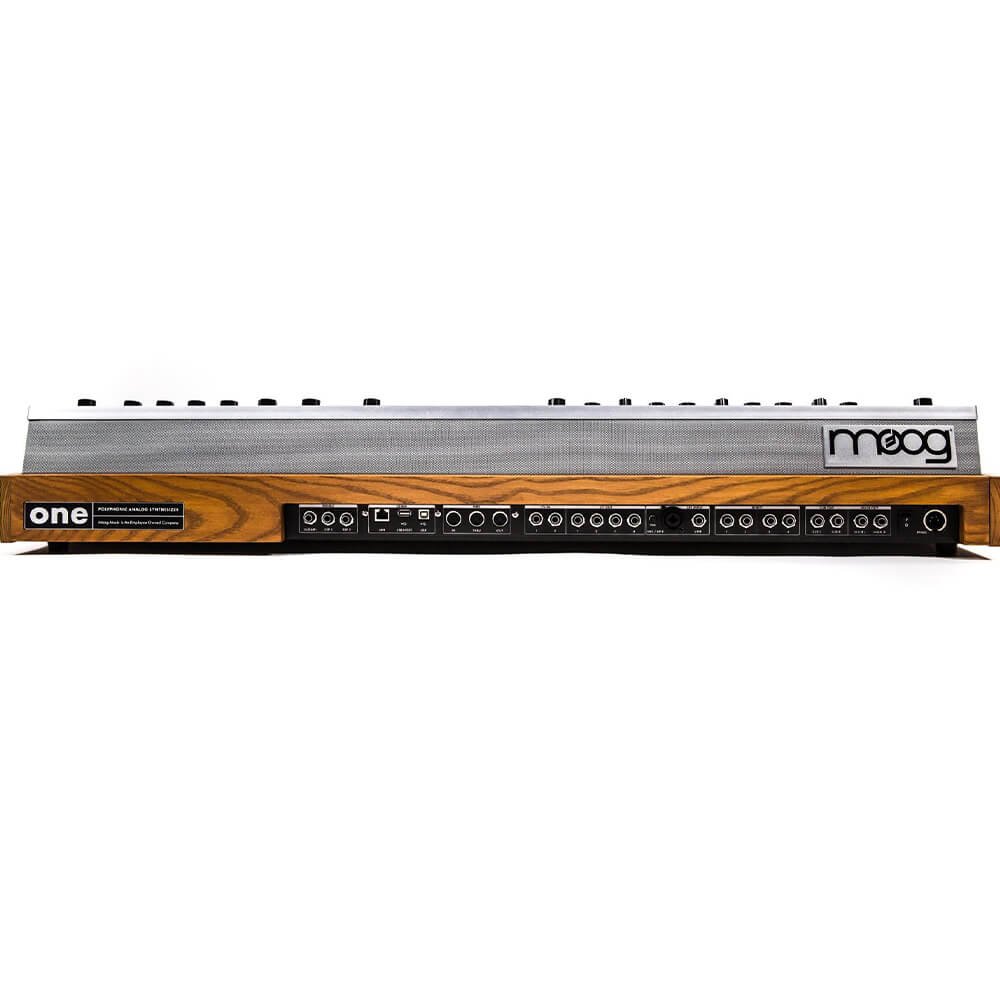
- 2 assignable pairs of stereo audio outputs.
- 4 assignable inserts for external processing.
- 2 external audio inputs (XLR and ¼”) with trim knob.
- MIDI communication via 5-pin DIN and USB.
- 9 configurable CV inputs and outputs, including expression and sustain pedal inputs.
- LAN port for future expansion.
Additional Details:
- Weight: Approximately 45 lbs. (20.4 kg).
- Dimensions: 42” x 20” x 7” (107cm x 51cm x 18cm).
- Available in 8-voice and 16-voice configurations; upgrades from 8 to 16 voices are not currently available.
The Moog One is designed to provide a versatile and expressive analog synthesizer experience with a wide range of sound shaping and performance capabilities, making it suitable for both studio work and live performances.
For musicians, producers, and sound designers seeking unparalleled sonic depth and versatility, the Moog One 16 Voice Polyphonic Analog Synthesizer stands as the ultimate instrument to elevate creativity and performance. This flagship analog synthesizer delivers a powerful combination of rich, warm analog tones fused with modern digital effects and comprehensive control options, enabling artists to craft complex, textured sounds that cut through any mix. Whether you are composing intricate studio arrangements or performing live, the Moog One offers a level of polyphonic power and expressive control that meets the demands of today’s most discerning musicians.
At the heart of the Moog One is a tri-timbral analog sound engine with true 16-voice polyphony, meaning you can layer and stack sounds or split the keyboard into three independent synth parts simultaneously. Each voice features three voltage-controlled oscillators capable of producing sawtooth, triangle, and pulse width waveforms, offering a vast palette of tonal possibilities. The inclusion of frequency modulation, hard sync, and ring modulation expands the creative scope, allowing users to sculpt aggressive leads, lush pads, or complex evolving textures with precision. So what does this mean for you? It means you can create rich, multi-dimensional sounds that were previously only achievable with multiple synthesizers, streamlining your workflow and enhancing your sonic expression.
Complementing the oscillators are extensive modulation options, including four assignable LFOs with variable waveforms and shapes, plus three DAHDSR envelopes per voice with variable curves, multi-trigger, looping, synchronization, and latch features. This deep modulation architecture lets you animate every aspect of your sound with fine detail, from subtle vibrato and filter sweeps to rhythmic gating and dynamic envelope shaping. The state-variable and ladder filters are mixable in parallel or series, providing classic Moog warmth alongside flexible tonal shaping options. This means you gain full control over your sound’s character, allowing you to tailor your patches to fit any musical context.
Beyond its analog core, the Moog One integrates sophisticated digital effects from Eventide, plus Moog’s own digital effects, all bypassable and assignable per synth layer. This integration of analog synthesis with high-quality reverbs, delays, and modulation effects enriches your sound design possibilities without requiring external gear. The per-synth arpeggiators and a 64-step sequencer with step editing and modulation capabilities add powerful rhythmic and melodic sequencing tools directly at your fingertips, enhancing creative spontaneity and performance flexibility.
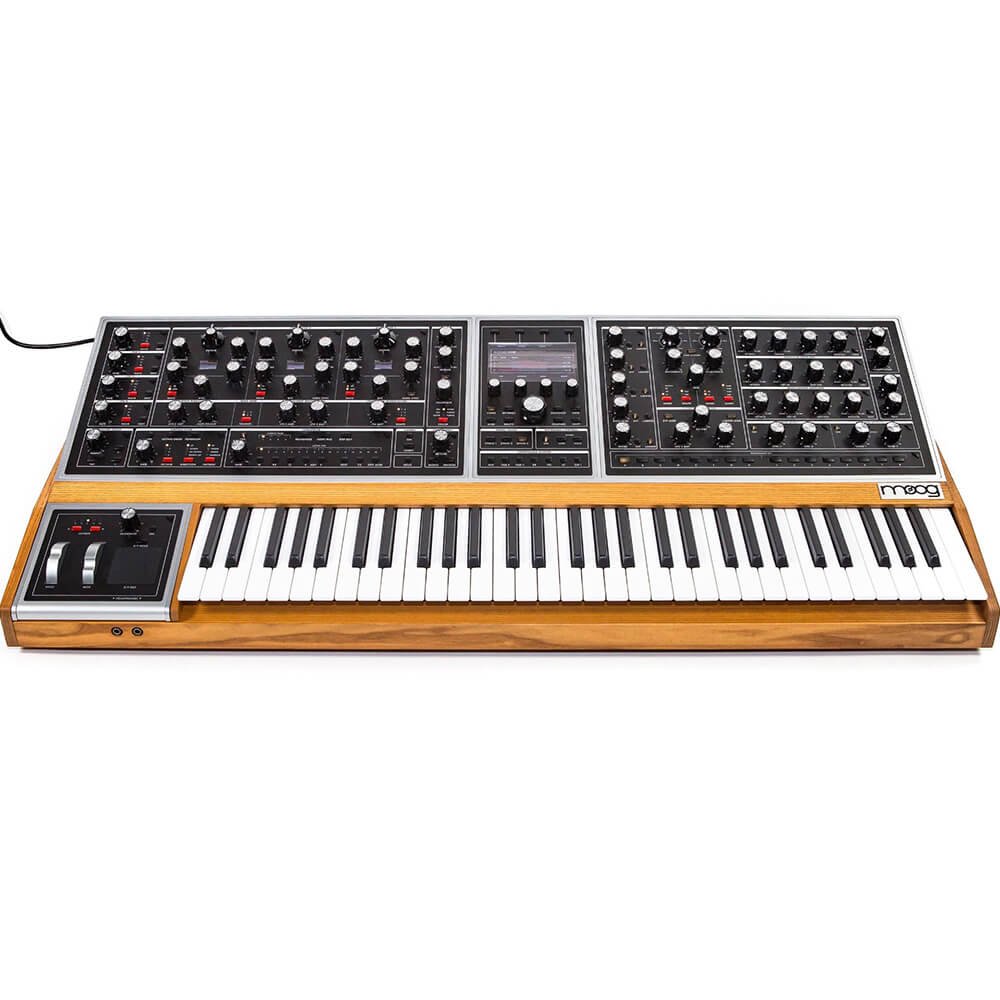
The Moog One’s 61 full-size Fatar TP-8 S keys are velocity-sensitive and feature aftertouch, allowing nuanced performance dynamics and expressive control via pitchbend and mod wheels, as well as an X/Y pressure-sensitive pad for additional modulation input. The extensive I/O options, including balanced main and sub outputs, multiple audio inserts, dual headphone outputs, comprehensive MIDI and USB connectivity, CV inputs and outputs, pedal inputs, and even a future expansion LAN port, ensure seamless integration with any studio or live rig. Weighing 45 pounds and measuring 42 inches wide by 20 inches deep and 7 inches high, it delivers a substantial but manageable footprint for both stage and studio environments.
In practical terms, the Moog One is perfect for professional musicians who demand unmatched analog polyphony and sound design depth, producers looking to incorporate signature Moog tones with cutting-edge modulation and effects, and live performers requiring a versatile, expressive instrument capable of complex layering and sequencing. Its 64 presets and 128 performance sets provide a rich starting point and memory bank for quick recall, saving valuable time during sessions or shows.
When you choose the Moog One 16 Voice Polyphonic Analog Synthesizer, you invest in a meticulously engineered instrument built to inspire and endure. Its combination of classic Moog analog circuitry with modern digital integration offers a unique synthesis experience that empowers you to push creative boundaries confidently. Whether you are shaping your signature sound or exploring new sonic territories, the Moog One is the definitive synthesizer that meets professional standards for sound quality, flexibility, and performance reliability.
What are the dimensions and weight of the Moog One 16 Voice Polyphonic Analog Synthesizer, and will it fit on a standard keyboard stand?
The Moog One measures 42″ wide, 20″ deep, and 7″ high, weighing approximately 45 lbs (20.4 kg). It fits well on most professional keyboard stands designed to support full-size 61-note keyboards, but we recommend checking your stand’s weight capacity and width to ensure a secure fit.
Does the Moog One come with a power supply and necessary cables included?
Yes, the Moog One includes a 4-pin 19 V DC power supply in the box. However, standard audio, MIDI, or USB cables are not included, so you’ll need to provide those separately based on your setup requirements.
Can I connect the Moog One to my computer for MIDI control and preset management?
Absolutely. The Moog One features USB and 5-pin DIN MIDI In/Out/Thru ports, allowing seamless MIDI communication with your computer or other MIDI gear. You can manage presets and perform system backups via the USB Type B port.
How do the 3-part multitimbrality and 16 voices enhance live performance and sound design?
The Moog One’s tri-timbral architecture lets you split, layer, or stack three independent synth parts simultaneously, each with its own 16-voice polyphony. This enables complex sound layering and versatile live performances without needing additional synths.
What is the best way to care for and maintain the analog components of this synthesizer?
To maintain optimal performance, keep the Moog One away from extreme temperatures and humidity. Use a soft, dry cloth for cleaning, avoid liquids near controls, and power it off when not in use. Regularly update firmware via USB to ensure stability and new features.
How long does shipping usually take for the Moog One, and is it shipped fully insured?
Shipping times vary by location but typically take 5-10 business days. The Moog One is shipped securely with full insurance to protect against damage or loss during transit. You will receive tracking information once your order ships.
What are the dimensions and weight of the Moog One 16 Voice Polyphonic Analog Synthesizer, and will it fit on a standard keyboard stand?
The Moog One measures 42″ wide, 20″ deep, and 7″ high, weighing approximately 45 lbs (20.4 kg). It fits well on most professional keyboard stands designed to support full-size 61-note keyboards, but we recommend checking your stand’s weight capacity and width to ensure a secure fit.
Does the Moog One come with a power supply and necessary cables included?
Yes, the Moog One includes a 4-pin 19 V DC power supply in the box. However, standard audio, MIDI, or USB cables are not included, so you’ll need to provide those separately based on your setup requirements.
Can I connect the Moog One to my computer for MIDI control and preset management?
Absolutely. The Moog One features USB and 5-pin DIN MIDI In/Out/Thru ports, allowing seamless MIDI communication with your computer or other MIDI gear. You can manage presets and perform system backups via the USB Type B port.
How do the 3-part multitimbrality and 16 voices enhance live performance and sound design?
The Moog One’s tri-timbral architecture lets you split, layer, or stack three independent synth parts simultaneously, each with its own 16-voice polyphony. This enables complex sound layering and versatile live performances without needing additional synths.
What is the best way to care for and maintain the analog components of this synthesizer?
To maintain optimal performance, keep the Moog One away from extreme temperatures and humidity. Use a soft, dry cloth for cleaning, avoid liquids near controls, and power it off when not in use. Regularly update firmware via USB to ensure stability and new features.
How long does shipping usually take for the Moog One, and is it shipped fully insured?
Shipping times vary by location but typically take 5-10 business days. The Moog One is shipped securely with full insurance to protect against damage or loss during transit. You will receive tracking information once your order ships.
What are the dimensions and weight of the Moog One 16 Voice Polyphonic Analog Synthesizer, and will it fit on a standard keyboard stand?
The Moog One measures 42″ wide, 20″ deep, and 7″ high, weighing approximately 45 lbs (20.4 kg). It fits well on most professional keyboard stands designed to support full-size 61-note keyboards, but we recommend checking your stand’s weight capacity and width to ensure a secure fit.
Does the Moog One come with a power supply and necessary cables included?
Yes, the Moog One includes a 4-pin 19 V DC power supply in the box. However, standard audio, MIDI, or USB cables are not included, so you’ll need to provide those separately based on your setup requirements.
Can I connect the Moog One to my computer for MIDI control and preset management?
Absolutely. The Moog One features USB and 5-pin DIN MIDI In/Out/Thru ports, allowing seamless MIDI communication with your computer or other MIDI gear. You can manage presets and perform system backups via the USB Type B port.
How do the 3-part multitimbrality and 16 voices enhance live performance and sound design?
The Moog One’s tri-timbral architecture lets you split, layer, or stack three independent synth parts simultaneously, each with its own 16-voice polyphony. This enables complex sound layering and versatile live performances without needing additional synths.
What is the best way to care for and maintain the analog components of this synthesizer?
To maintain optimal performance, keep the Moog One away from extreme temperatures and humidity. Use a soft, dry cloth for cleaning, avoid liquids near controls, and power it off when not in use. Regularly update firmware via USB to ensure stability and new features.
How long does shipping usually take for the Moog One, and is it shipped fully insured?
Shipping times vary by location but typically take 5-10 business days. The Moog One is shipped securely with full insurance to protect against damage or loss during transit. You will receive tracking information once your order ships.
What are the dimensions and weight of the Moog One 16 Voice Polyphonic Analog Synthesizer, and will it fit on a standard keyboard stand?
The Moog One measures 42″ wide, 20″ deep, and 7″ high, weighing approximately 45 lbs (20.4 kg). It fits well on most professional keyboard stands designed to support full-size 61-note keyboards, but we recommend checking your stand’s weight capacity and width to ensure a secure fit.
Does the Moog One come with a power supply and necessary cables included?
Yes, the Moog One includes a 4-pin 19 V DC power supply in the box. However, standard audio, MIDI, or USB cables are not included, so you’ll need to provide those separately based on your setup requirements.
Can I connect the Moog One to my computer for MIDI control and preset management?
Absolutely. The Moog One features USB and 5-pin DIN MIDI In/Out/Thru ports, allowing seamless MIDI communication with your computer or other MIDI gear. You can manage presets and perform system backups via the USB Type B port.
How do the 3-part multitimbrality and 16 voices enhance live performance and sound design?
The Moog One’s tri-timbral architecture lets you split, layer, or stack three independent synth parts simultaneously, each with its own 16-voice polyphony. This enables complex sound layering and versatile live performances without needing additional synths.
What is the best way to care for and maintain the analog components of this synthesizer?
To maintain optimal performance, keep the Moog One away from extreme temperatures and humidity. Use a soft, dry cloth for cleaning, avoid liquids near controls, and power it off when not in use. Regularly update firmware via USB to ensure stability and new features.
How long does shipping usually take for the Moog One, and is it shipped fully insured?
Shipping times vary by location but typically take 5-10 business days. The Moog One is shipped securely with full insurance to protect against damage or loss during transit. You will receive tracking information once your order ships.
What are the dimensions and weight of the Moog One 16 Voice Polyphonic Analog Synthesizer, and will it fit on a standard keyboard stand?
The Moog One measures 42″ wide, 20″ deep, and 7″ high, weighing approximately 45 lbs (20.4 kg). It fits well on most professional keyboard stands designed to support full-size 61-note keyboards, but we recommend checking your stand’s weight capacity and width to ensure a secure fit.
Does the Moog One come with a power supply and necessary cables included?
Yes, the Moog One includes a 4-pin 19 V DC power supply in the box. However, standard audio, MIDI, or USB cables are not included, so you’ll need to provide those separately based on your setup requirements.
Can I connect the Moog One to my computer for MIDI control and preset management?
Absolutely. The Moog One features USB and 5-pin DIN MIDI In/Out/Thru ports, allowing seamless MIDI communication with your computer or other MIDI gear. You can manage presets and perform system backups via the USB Type B port.
How do the 3-part multitimbrality and 16 voices enhance live performance and sound design?
The Moog One’s tri-timbral architecture lets you split, layer, or stack three independent synth parts simultaneously, each with its own 16-voice polyphony. This enables complex sound layering and versatile live performances without needing additional synths.
What is the best way to care for and maintain the analog components of this synthesizer?
To maintain optimal performance, keep the Moog One away from extreme temperatures and humidity. Use a soft, dry cloth for cleaning, avoid liquids near controls, and power it off when not in use. Regularly update firmware via USB to ensure stability and new features.
How long does shipping usually take for the Moog One, and is it shipped fully insured?
Shipping times vary by location but typically take 5-10 business days. The Moog One is shipped securely with full insurance to protect against damage or loss during transit. You will receive tracking information once your order ships.
What are the dimensions and weight of the Moog One 16 Voice Polyphonic Analog Synthesizer, and will it fit on a standard keyboard stand?
The Moog One measures 42″ wide, 20″ deep, and 7″ high, weighing approximately 45 lbs (20.4 kg). It fits well on most professional keyboard stands designed to support full-size 61-note keyboards, but we recommend checking your stand’s weight capacity and width to ensure a secure fit.
Does the Moog One come with a power supply and necessary cables included?
Yes, the Moog One includes a 4-pin 19 V DC power supply in the box. However, standard audio, MIDI, or USB cables are not included, so you’ll need to provide those separately based on your setup requirements.
Can I connect the Moog One to my computer for MIDI control and preset management?
Absolutely. The Moog One features USB and 5-pin DIN MIDI In/Out/Thru ports, allowing seamless MIDI communication with your computer or other MIDI gear. You can manage presets and perform system backups via the USB Type B port.
How do the 3-part multitimbrality and 16 voices enhance live performance and sound design?
The Moog One’s tri-timbral architecture lets you split, layer, or stack three independent synth parts simultaneously, each with its own 16-voice polyphony. This enables complex sound layering and versatile live performances without needing additional synths.
What is the best way to care for and maintain the analog components of this synthesizer?
To maintain optimal performance, keep the Moog One away from extreme temperatures and humidity. Use a soft, dry cloth for cleaning, avoid liquids near controls, and power it off when not in use. Regularly update firmware via USB to ensure stability and new features.
How long does shipping usually take for the Moog One, and is it shipped fully insured?
Shipping times vary by location but typically take 5-10 business days. The Moog One is shipped securely with full insurance to protect against damage or loss during transit. You will receive tracking information once your order ships.
What are the dimensions and weight of the Moog One 16 Voice Polyphonic Analog Synthesizer, and will it fit on a standard keyboard stand?
The Moog One measures 42″ wide, 20″ deep, and 7″ high, weighing approximately 45 lbs (20.4 kg). It fits well on most professional keyboard stands designed to support full-size 61-note keyboards, but we recommend checking your stand’s weight capacity and width to ensure a secure fit.
Does the Moog One come with a power supply and necessary cables included?
Yes, the Moog One includes a 4-pin 19 V DC power supply in the box. However, standard audio, MIDI, or USB cables are not included, so you’ll need to provide those separately based on your setup requirements.
Can I connect the Moog One to my computer for MIDI control and preset management?
Absolutely. The Moog One features USB and 5-pin DIN MIDI In/Out/Thru ports, allowing seamless MIDI communication with your computer or other MIDI gear. You can manage presets and perform system backups via the USB Type B port.
How do the 3-part multitimbrality and 16 voices enhance live performance and sound design?
The Moog One’s tri-timbral architecture lets you split, layer, or stack three independent synth parts simultaneously, each with its own 16-voice polyphony. This enables complex sound layering and versatile live performances without needing additional synths.
What is the best way to care for and maintain the analog components of this synthesizer?
To maintain optimal performance, keep the Moog One away from extreme temperatures and humidity. Use a soft, dry cloth for cleaning, avoid liquids near controls, and power it off when not in use. Regularly update firmware via USB to ensure stability and new features.
How long does shipping usually take for the Moog One, and is it shipped fully insured?
Shipping times vary by location but typically take 5-10 business days. The Moog One is shipped securely with full insurance to protect against damage or loss during transit. You will receive tracking information once your order ships.
What are the dimensions and weight of the Moog One 16 Voice Polyphonic Analog Synthesizer, and will it fit on a standard keyboard stand?
The Moog One measures 42″ wide, 20″ deep, and 7″ high, weighing approximately 45 lbs (20.4 kg). It fits well on most professional keyboard stands designed to support full-size 61-note keyboards, but we recommend checking your stand’s weight capacity and width to ensure a secure fit.
Does the Moog One come with a power supply and necessary cables included?
Yes, the Moog One includes a 4-pin 19 V DC power supply in the box. However, standard audio, MIDI, or USB cables are not included, so you’ll need to provide those separately based on your setup requirements.
Can I connect the Moog One to my computer for MIDI control and preset management?
Absolutely. The Moog One features USB and 5-pin DIN MIDI In/Out/Thru ports, allowing seamless MIDI communication with your computer or other MIDI gear. You can manage presets and perform system backups via the USB Type B port.
How do the 3-part multitimbrality and 16 voices enhance live performance and sound design?
The Moog One’s tri-timbral architecture lets you split, layer, or stack three independent synth parts simultaneously, each with its own 16-voice polyphony. This enables complex sound layering and versatile live performances without needing additional synths.
What is the best way to care for and maintain the analog components of this synthesizer?
To maintain optimal performance, keep the Moog One away from extreme temperatures and humidity. Use a soft, dry cloth for cleaning, avoid liquids near controls, and power it off when not in use. Regularly update firmware via USB to ensure stability and new features.
How long does shipping usually take for the Moog One, and is it shipped fully insured?
Shipping times vary by location but typically take 5-10 business days. The Moog One is shipped securely with full insurance to protect against damage or loss during transit. You will receive tracking information once your order ships.