Shopping Cart (0)

Close

No products in the cart.
track you order
customer care +91 8882775693

SPL Audio Phonitor x + DAC768xs

299,705

In stock

Estimated delivery dates: Feb 26, 2026 - Mar 2, 2026

In stock

Get GST invoice and save upto 18%

Product Highlights

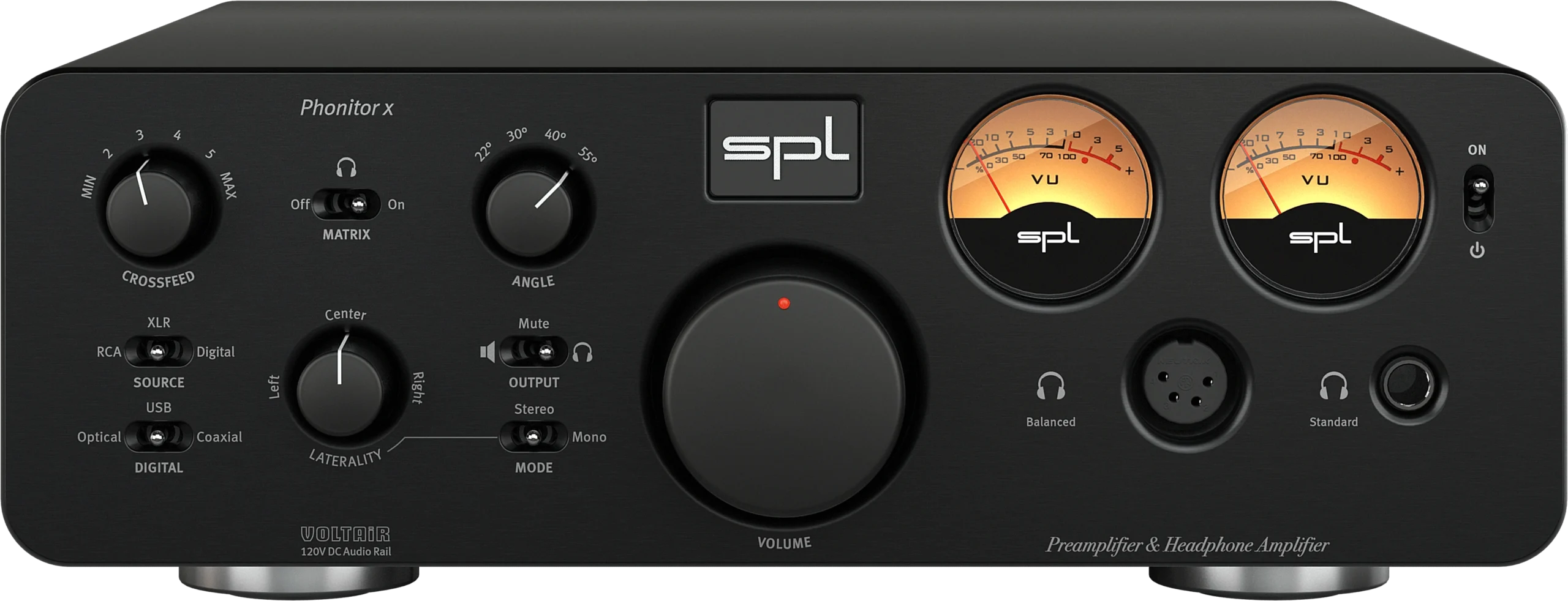
  • The Phonitor X is a top-tier headphone amplifier featuring Voltaire technology, capable of playing balanced/XLR and unbalanced/RCA headphones with a 3.7-watt output.
  • The Phonitor Matrix offers lifelike playback on headphones, allowing users to experience music like it was played through actual speakers, despite most music being recorded for speaker playback.
004-security

1 Year
Warranty

003-genuine

Genuine
Products

008-help-desk

Free Tech
Support

001-free-delivery

Secure
Shipping

006-money-back-guarantee

Absolute
Satisfaction

007-van

3 Days
Dispatch

SPL Audio Phonitor X Headphone Amplifier (2) (1)

Phonitor x

Headphone Amplifier and Preamplifier

The Phonitor x is both an outstanding headphone amplifier and an excellent preamplifier that can be used to directly drive power amplifiers or active speakers. With the optional DA converter, it not only plays from analog sources, but also directly from digital sources. The Phonitor Matrix allows speaker-like listening via headphones.


Thanks to VOLTAiR technology, it offers all this in the highest possible sound quality.

SPL Audio Phonitor X Headphone Amplifier (1)
SPL Audio Phonitor X Headphone Amplifier (3)

Great sound – for all headphones

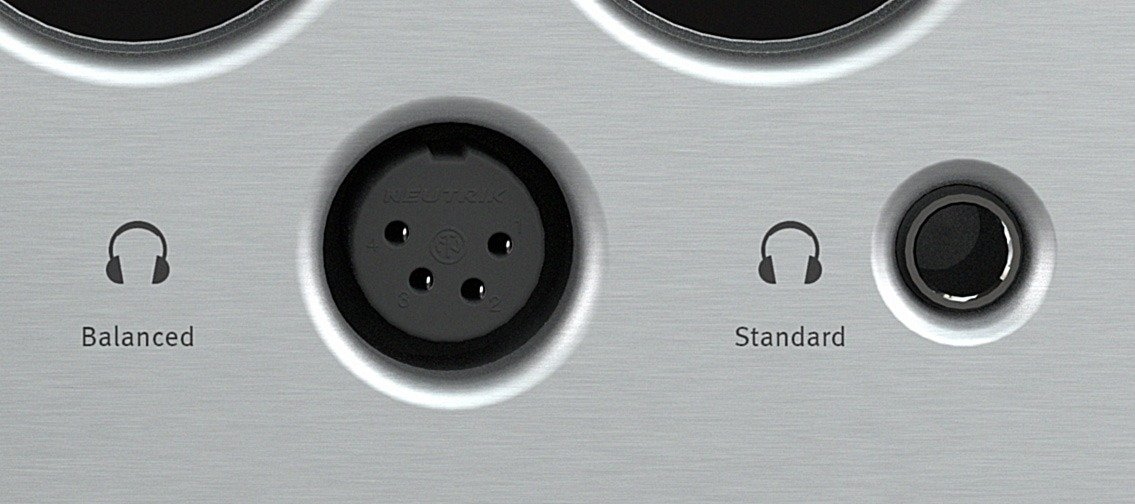
The Phonitor x offers connections for a standard headphone with a stereo jack plug and for balanced-driven headphones using a 4-pol XLR jack.

Thanks to the enormous output power, all headphones are driven effortlessly.

Thus, it plays out the advantages of the SPL VOLTAiR technology and rewards the listener with an honest, detailed and at the same time vivid sound experience.

Headphones or Speaker

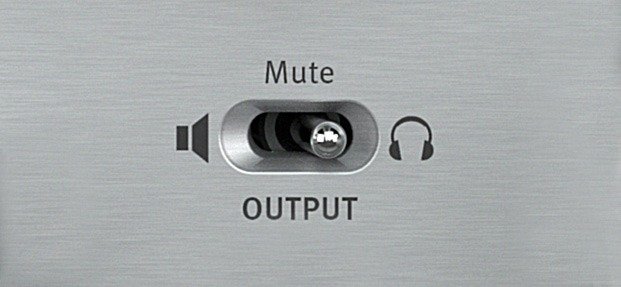
The OUTPUT switch turns the headphone amplifier into a preamplifier – simply switch from headphones to speakers.

In the center position (mute), no signal reaches the outputs. The VU meters light up red.

imgi_12_mute-output_pho-x
imgi_13_output-pho-x

To the power amplifiers

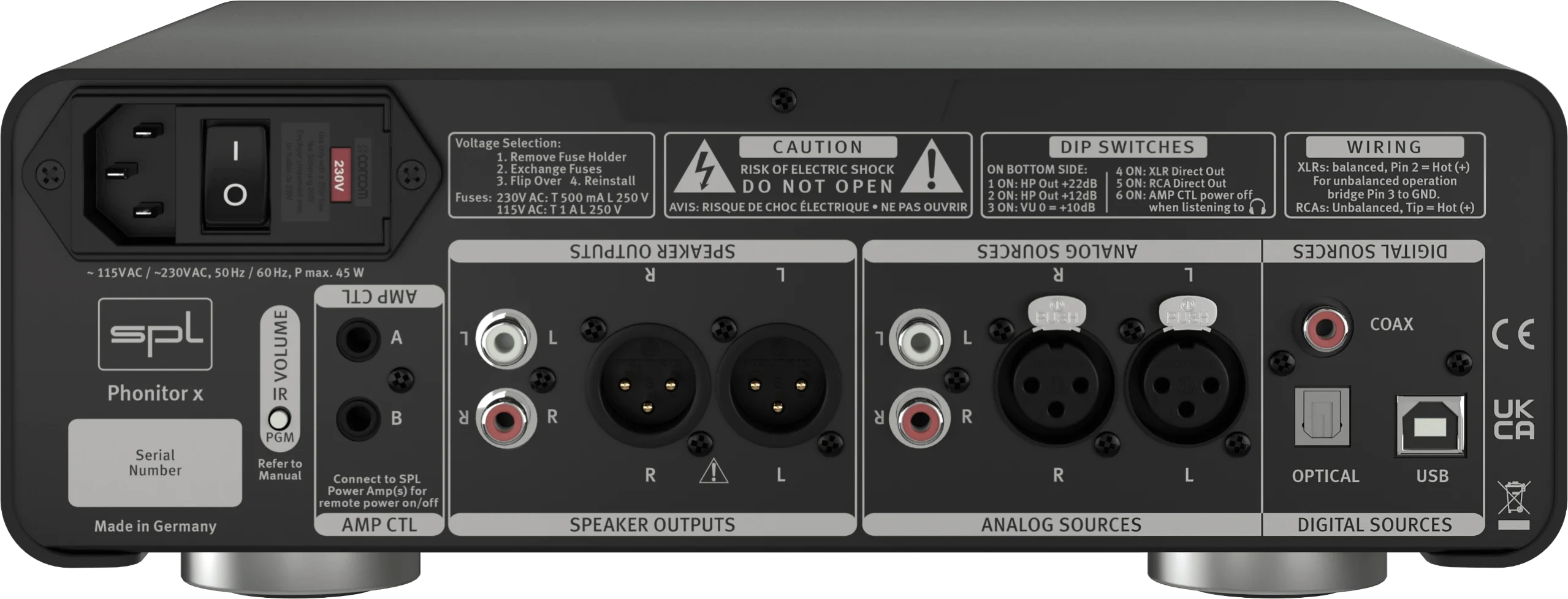
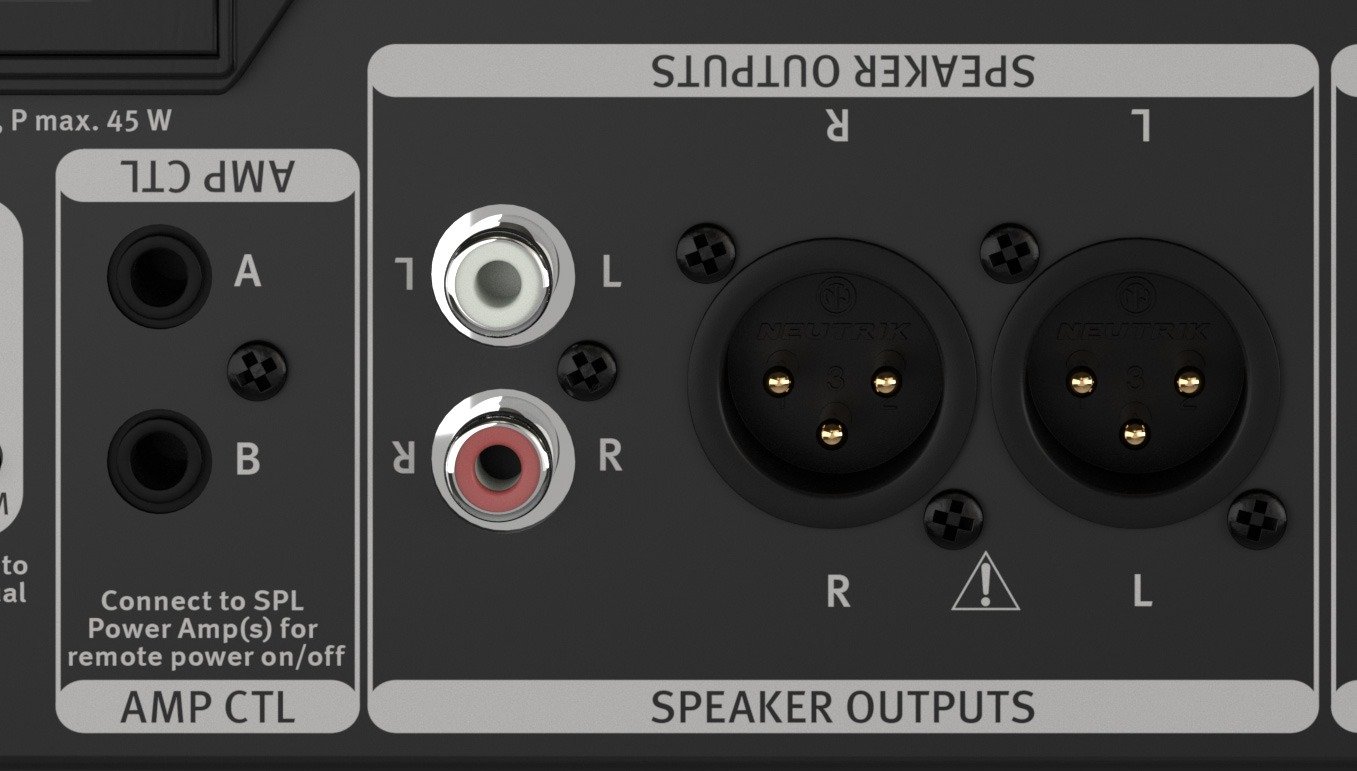
or to the active loudspeakers you can use the balanced via XLR sockets – for long cable runs, and unbalanced via RCA sockets. The source signal is always present at both speaker outputs.

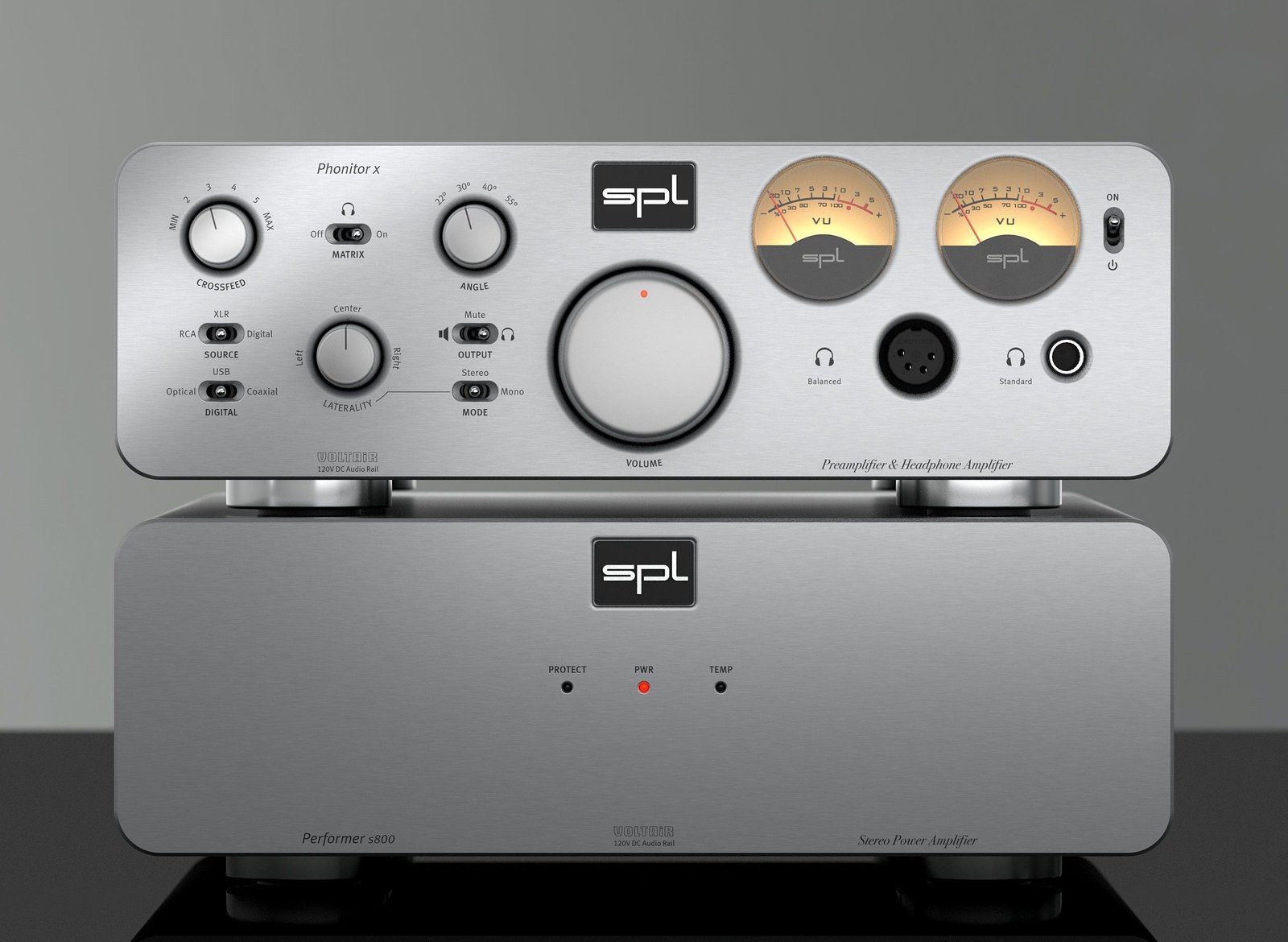
The standby mode of devices with 12V trigger input can be switched on and off via AMP CTL. This allows, for example, the SPL Performer s800, Performer m1000 or Performer s1200 power amplifiers to be ideally integrated into the set-up.

imgi_15_ProFi-Collage_Phonitor_x_Performer_s800

Milled from solid

The massive 45mm volume control knob milled from aluminum is a haptic highlight. Its mass together with the motorized Alps RK27 “Big Blue” potentiometer enhances the “spoon in the honey” feeling even further.


The red marker LED ensures good visibility of the volume parameter even in darkened environments.


SPL Audio Phonitor X Headphone Amplifier (4)

Remote Control

The volume control can be remotely controlled with any infrared remote control.


The Phonitor x learns to communicate with it with the simple push of a button.


Source of joy

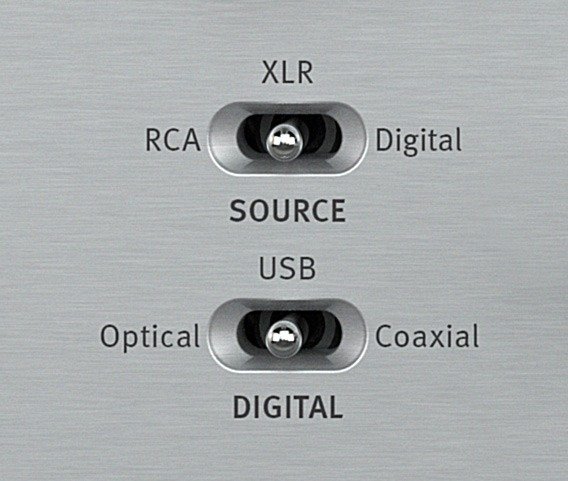
Up to five stereo sources can be connected to the Phonitor x:

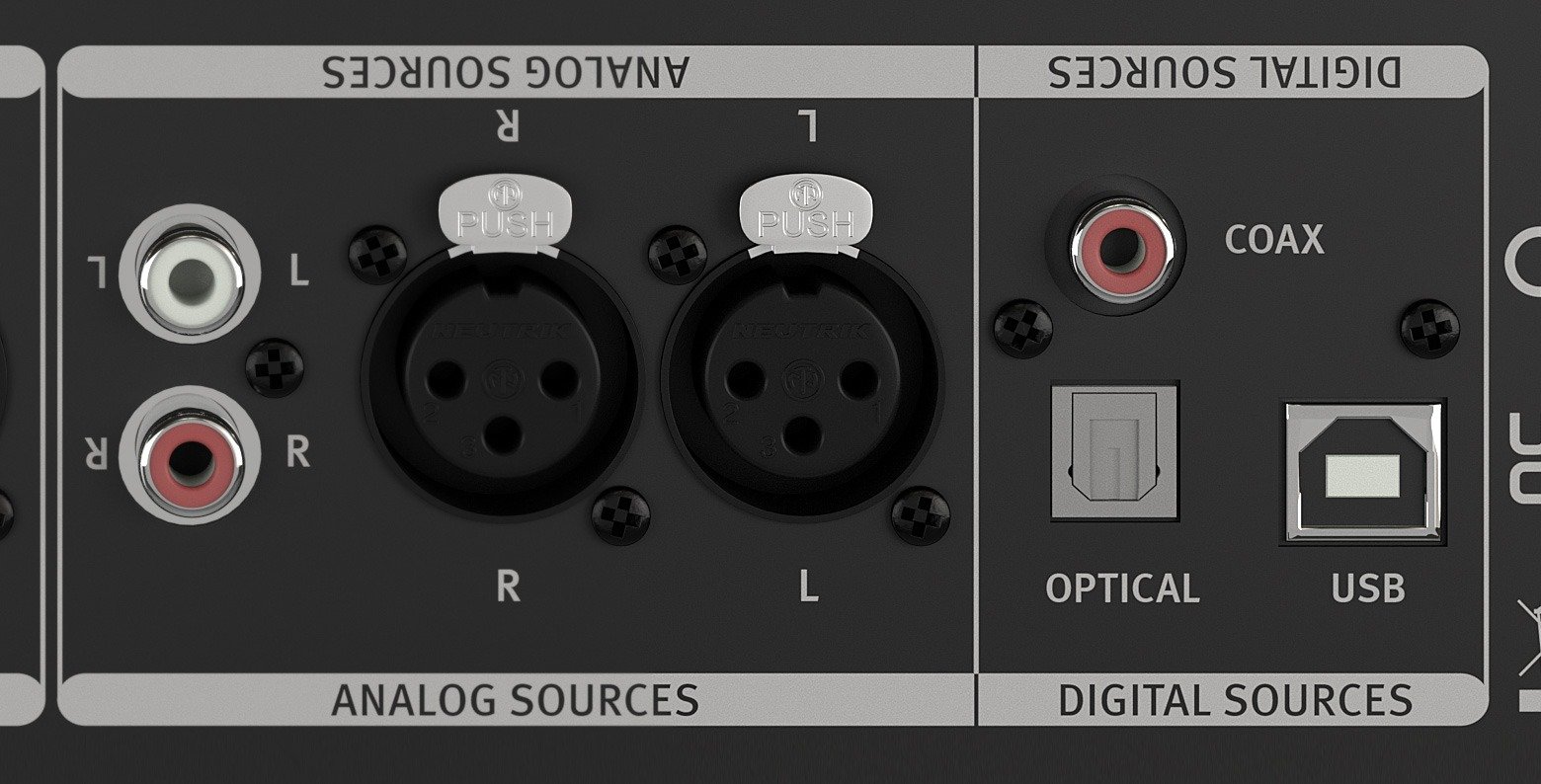
XLR, RCA, and via the optional DAC768xs, USB, COAX, and OPTICAL.


The Phonitor x accepts a variety of different audio connections.

Balanced via XLR or unbalanced via RCA jacks.


SPL Audio Phonitor X Headphone Amplifier (5)
SPL Audio Phonitor X Headphone Amplifier (6)

With the optional DAC768xs, three additional digital sources can be added. PCM audio is received in S/P-DIF format both coaxially (RCA) and optically (Toslink F06).

Both PCM audio and DSD audio can be converted via USB.


The DAC automatically picks up the sampling rate and resolution of the digital playback source. No matter if a streamer, computer or CD player is connected. No further settings on the Phonitor x are necessary.


The DAC768xs

The converter chip in the optional digital-to-analog converter is the highly acclaimed AKM AK4490 Velvet Sound™ premium DAC chip, which thanks to its architecture reproduces the finest sound details.


It converts PCM audio at 32-bit resolution and a sampling rate of up to 768 kHz, which is 16 times the resolution of a CD. Direct Stream Digital is also supported up to a resolution of DSD4 or DSD256.


Unlike the DAC768, which is built into the Director Mk2 for example or available as an option for the Phonitor xe, the DAC768xs does not offer an AES/EBU digital input. The SPL DLP120 with VOLTAiR technology was also not included in the DAC768xs. Nevertheless, it offers a great performance that is unparalleled in this league.


imgi_20_DAC768xs
imgi_22_vu_meter-pho-x

Good ol‘ times

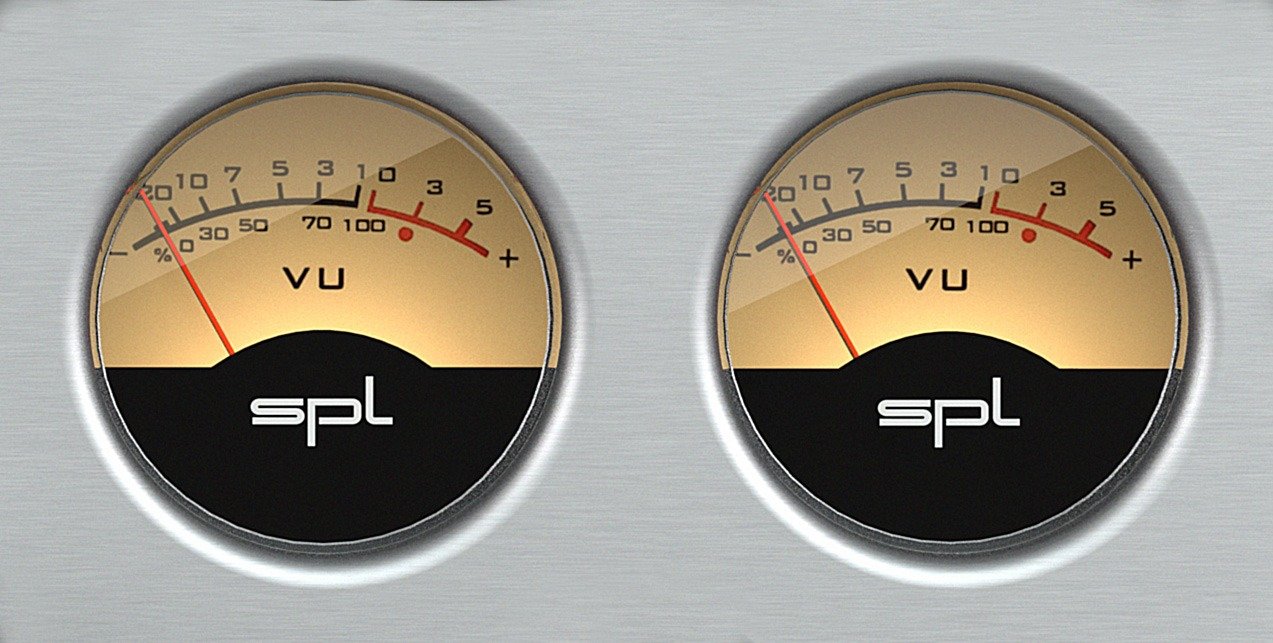
Two mechanical VU meters visualize the input levels for the left and right audio channel.

Finding the middle

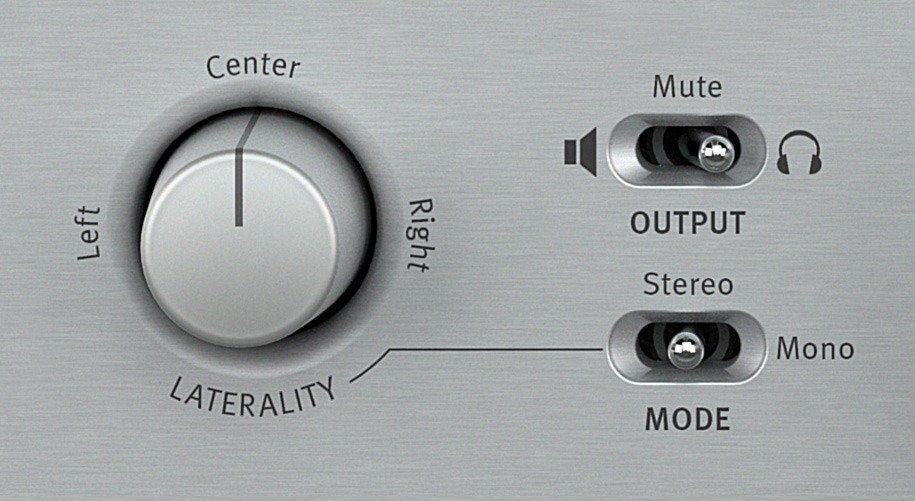
is not always easy. By our very nature, hearing can be leaning more to the left or more to the right. This is especially obvious when listening with headphones.

That’s why Phonitor x has the uniquely finely resolved laterality control. With it, the center can be found perfectly.

With the mode switch you can choose between stereo or mono playback. To the right, the laterality control is switched on.

SPL Audio Phonitor X Headphone Amplifier (7)

The Revolution: Phonitor-Matrix

The Phonitor Matrix is the revolution in the headphone amplifier.

SPL Audio Phonitor X Headphone Amplifier (8)

Thanks to the Phonitor Matrix, music can be experienced on headphones as if it was played on speakers. The tiring super stereo effect is a thing of the past.


Enjoy their music without listening fatigue and exactly the way it should be heard.

Music is normally produced and mixed for playback on stereo speakers.


Listening on headphones is different from listening on loudspeakers. The biggest difference is the lack of crossing signals of the sound signal from the left speaker to the right ear and from the right speaker to the left ear. These crossing signals are missing in conventional headphone listening, because there are no signals crossing from one side of the headphones to the other.


This results in an unnaturally wide stereo image and the various sound sources of the audio signal are not localized as the sound engineer intended them to. This effect is often referred to as “super stereo effect”. During conventional listening on headphones, our brain can balance the false representation of the playback to a certain extent – but this is very exhausting.


The SPL Phonitor Matrix can correct this false stereo image with an analog circuitry. The Phonitor Matrix therefore not only ensures a correct representation of the stereo image, but also a relaxed listening experience.

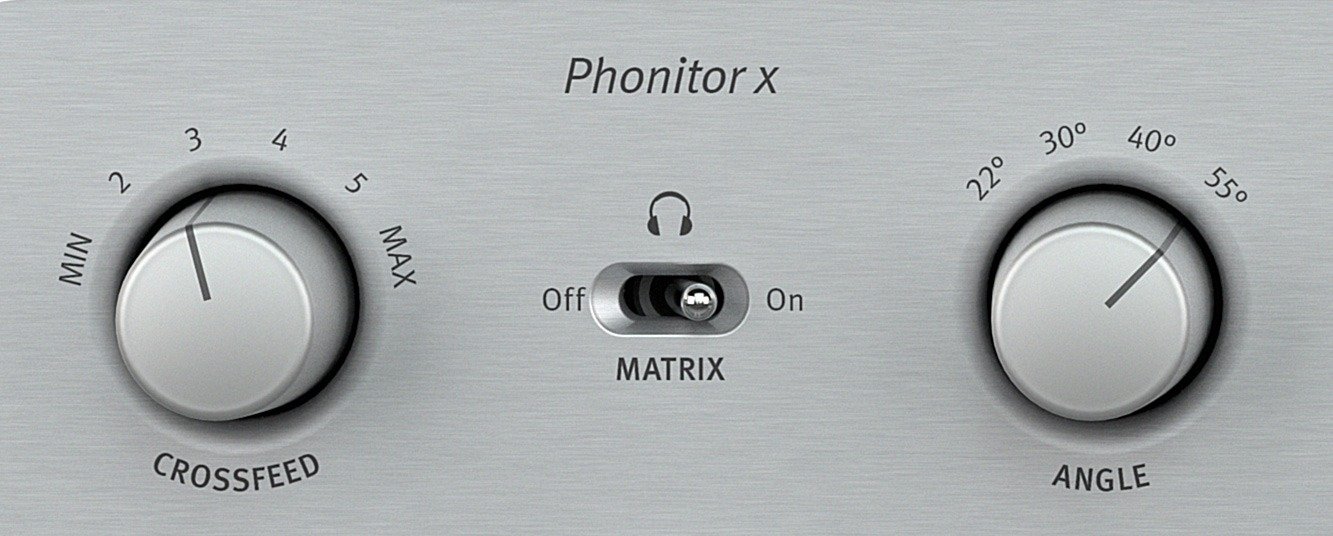
The two main parameters of the Phonitor Matrix are Crossfeed and Angle:


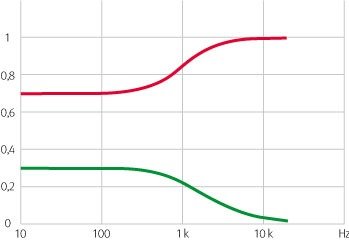
Crossfeed determines the crossing signals of the channels, the so-called interaural level difference.

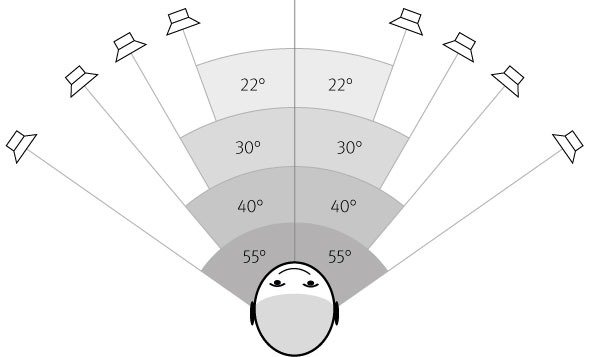
Angle determines the opening angle of the stereo image, the so-called interaural time difference.

Crossfeed

imgi_30_interaural_level_CFmax_SA30

Level and frequency adjustment of the right (red) and left (green) audio channel at maximum crossfeed.

Angle

imgi_31_Lautsprecherwinkel

Settings for the speaker placement angle to determine the interaural time difference.

The VOLTAiR Technology

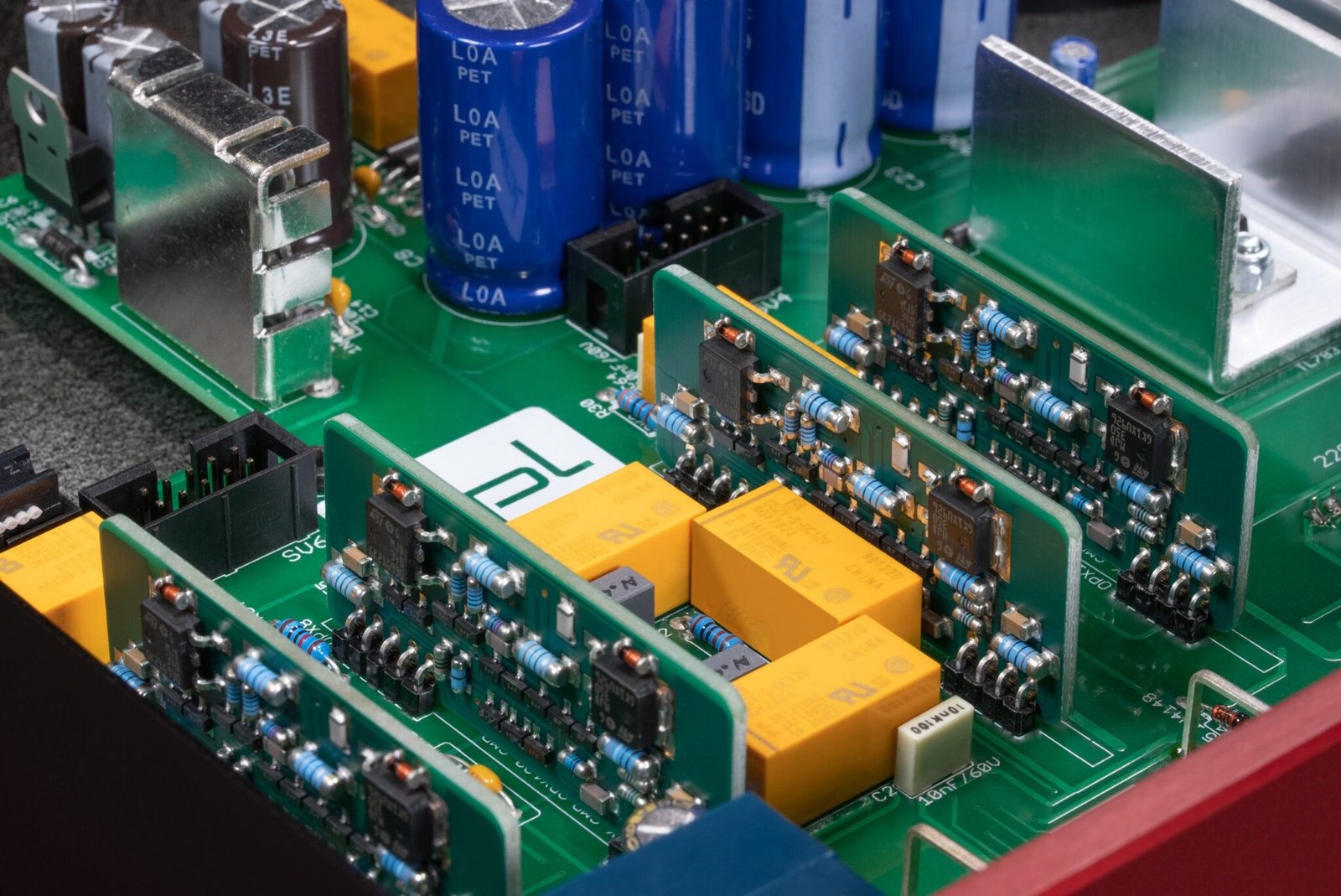
The 120V technology is our reference technology. The 120V technology is unique in the world. It operates at a DC voltage of 120 volts. This is four times that of IC-based semiconductor op-amps. In our Professional Fidelity series, we refer to this unsurpassed technology as VOLTAiR technology.

imgi_68_Phonitor-se-innen-2048x1368

The highest possible audio quality requires the highest possible audio operating voltage.

The 120V technology works with +/-60 V. To be able to handle such a high voltage, we have developed special proprietary operational amplifiers that can operate with a DC voltage of +/-60 V: the SPL 120V SUPRA operational amplifiers. This high voltage would destroy conventional components and operational amplifiers.


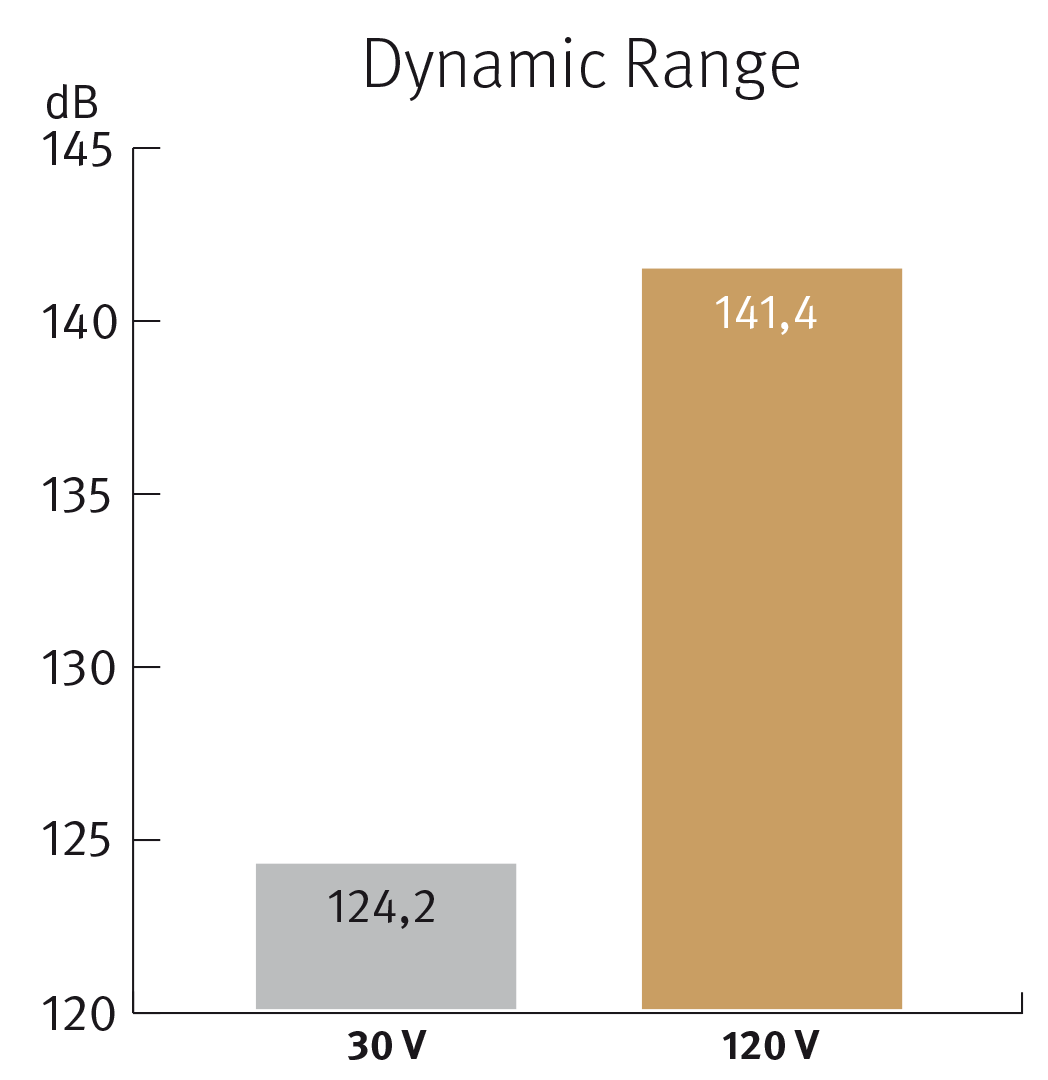
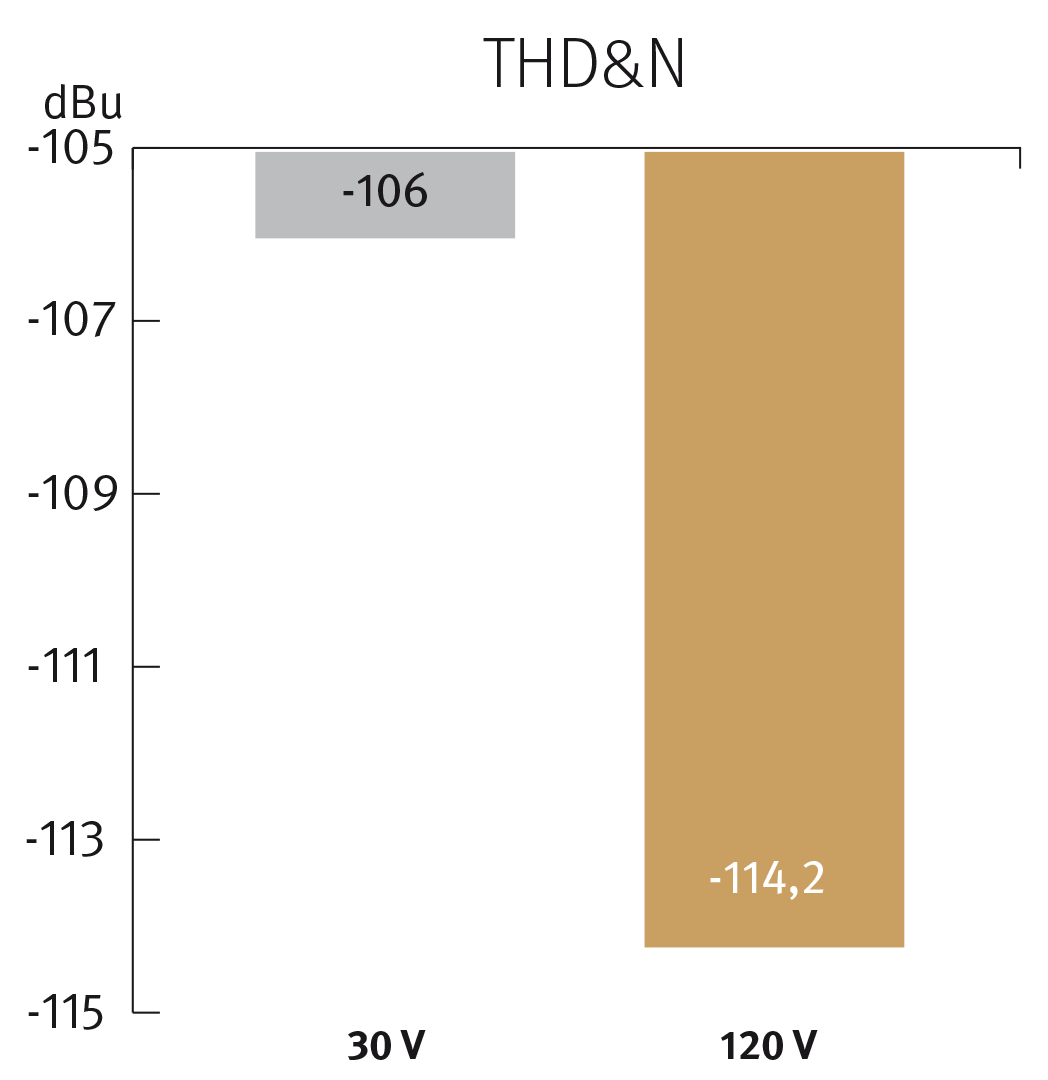
The 120V technology achieves exceptional technical specifications and sonic benefits. Technically, in terms of dynamic range, signal-to-noise ratio and headroom. Sonically, in terms of richness of detail and an absolutely relaxed listening experience.


By the way, the “120V” in the name of the technology has nothing to do with the local mains voltage from the mains power socket. This is about the operating voltage inside the device with which the audio signals are processed.


The mains voltage from the mains power socket is transformed to the required secondary voltage in the device’s internal linear power supply with toroidal transformer. Rectifiers convert this AC voltage into DC voltage required in the audio device.


Comparison

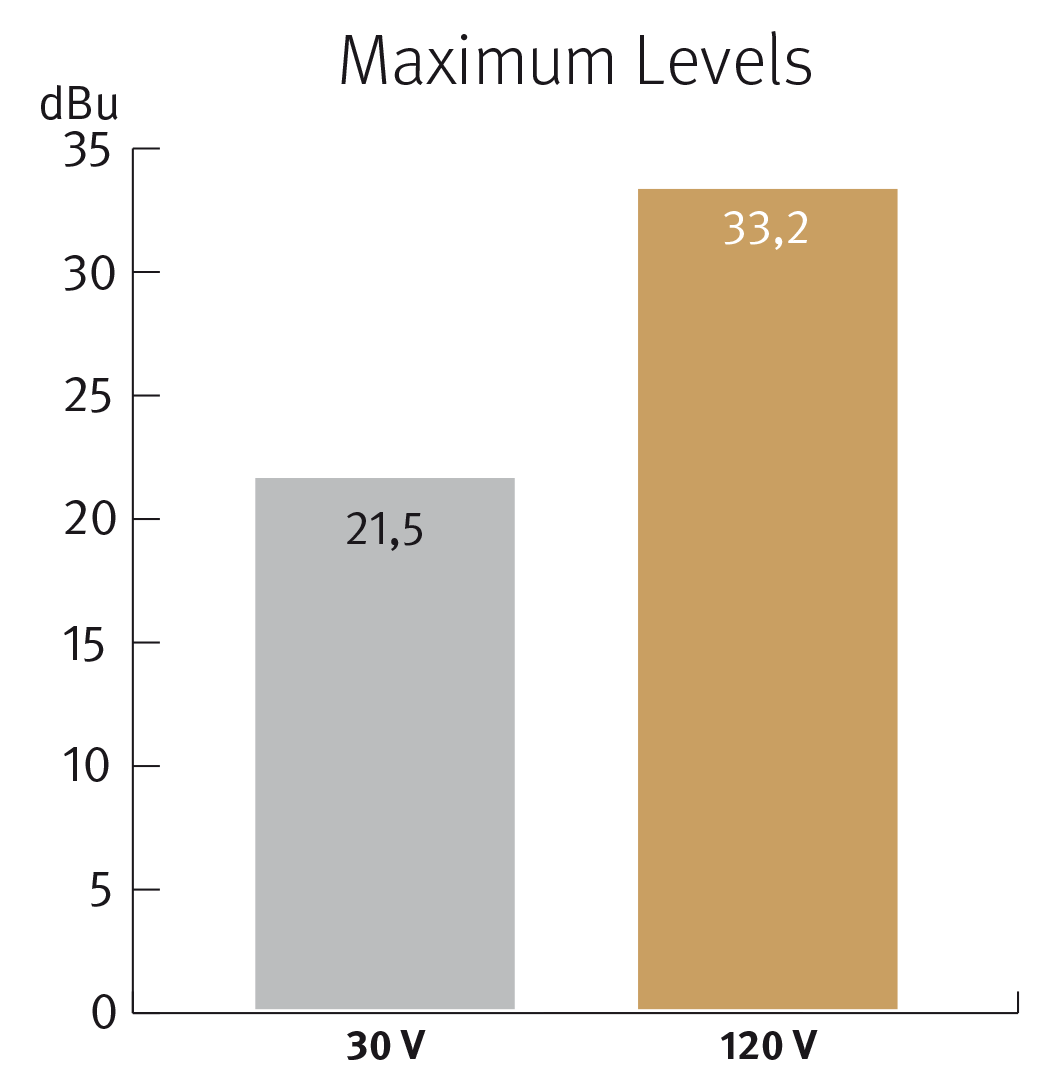
Most audio devices work with an internal operating voltage of +/-15 volts and can thus process a maximum input level of +21.5 dBu. If a DAC, for example, has an output level of +22 dBu at 0 dBFS, level peaks of the music material would already cause overloads in the input stage of the device. All components in the audio device often operate at their limits. The result is an unsteady sound that causes stress and faster ear fatigue.

SPL devices with VOLTAiR technology can handle input levels of +32.5 dBu thanks to the higher internal operating voltage of +/- 60 volts – thus offering 12 dB more headroom. All components consequently operate continuously in the optimum operating range. The result is a very pleasant, natural and relaxed sound experience. So you can enjoy your music in every detail.

These diagrams clearly show the superiority of the VOLTAiR technology in comparison to other circuits with lower, common operating voltages.

imgi_35_120V-Diagramm_Dynamikumfang_EN
imgi_36_120V-Diagramm_Maximalpegel_EN
imgi_37_120V-Diagramm_THD_NFarbe_EN-1
Analog input & output

Maximum input & output gain : 32.5 dBu
Input impedance (RCA) : 20 kΩ
Input impedance (XLR) : 20 kΩ
Output impedance : 75 Ω
Common mode rejection ratio (XLR) : 82 dB
Frequency range (0 dBu) : 10 Hz – 100 kHz
THD + N (1 kHz, 0 dBu) : 0.00085 %
Crosstalk (1 kHz, 0 dBu) : -90 dB
Noise (A-weighted): -103 dBu
Dynamic range : 135 dB

Mains Power Supply

Mains voltage (selectable, see fuse chamber) : 230 V AC / 50; 115 V AC / 60 Hz
Fuse for 230 V : T 0.5 A
Fuse for 115 V : T 1 A
Power consumption : max. 40 VA
Stand-by power consumption
< 0.3 W

Dimensions & Weight

W x H x D (width x height x depth) : 278 x 100 x 300 mm , 11 x 4 x 11.81 inch
Unit weight : 4.4 kg , 9.7 lbs

Internal Linear Power Supply with Shielded Toroidal Transformer

Operating voltage for analog audio : +/- 60 V
Operating voltage for relays and LEDs : + 12 V

Digital Inputs, DAC768xs

Coaxial SPDIF (RCA), PCM sample rates : 44.1/48/88.2/96/176.4/192 kHz
Optical SPDIF (Toslink F06), PCM sample rates : 44.1/48/88.2/96/with Glass fibre <1m: 176.4/192 kHz
USB (B), PCM sample rates : 44.1/48/88.2/96/176.4/192/352.8/384/705.6/768 kHz
USB (B), DSD over PCM (DoP), sample rates : 2.8 (DSD64), 5.6 (DSD128), 11.2 (DSD256) MHz
0 dBFS calibrated to : 15 dBu

Balanced Headphones Output: 4-pol XLR

Pin wiring : 1 = L (+), 2 = L (-), 3 = R (+), 4 = R (-)
Source impedance : 0.36 Ω
Damping factor (40 ohms) : 180
Frequency range (0 dBu) : 10 Hz – 100 kHz
Crosstalk (1 kHz, 0 dBu) : -90 dB
THD + N (1 kHz, 0 dBu) : 0.00082 %
Noise (A-weighted) : -98 dBu
Output power (1 kHz, 1% THD, 250 Ω) : 2 x 3.5 W
Output power (1 kHz, 1% THD, 32 Ω) : 2 x 0.7 W
Dynamic range : 130.5 dB

Standard Headphones Output: 6.35 mm (1/4") TRS Jack

Wiring : Tip = Left, Ring = Right, Sleeve = GND
Source impedance : 0.18 Ω
Damping factor (40 ohms) : 180
Frequency range (0 dBu) : 10 Hz – 100 kHz
Crosstalk (1 kHz, 0 dBu) : -90 dB
THD + N (1 kHz, 0 dBu) : 0.00082 %
Noise (A-weighted) : -103 dBu
Output power (1 kHz, 1% THD, 250 Ω) : 2 x 5 W
Output power (1 kHz, 1% THD, 32 Ω) : 2 x 1 W
Dynamic range : 135.5 dB

Related Products

x