Shopping Cart (0)
Close

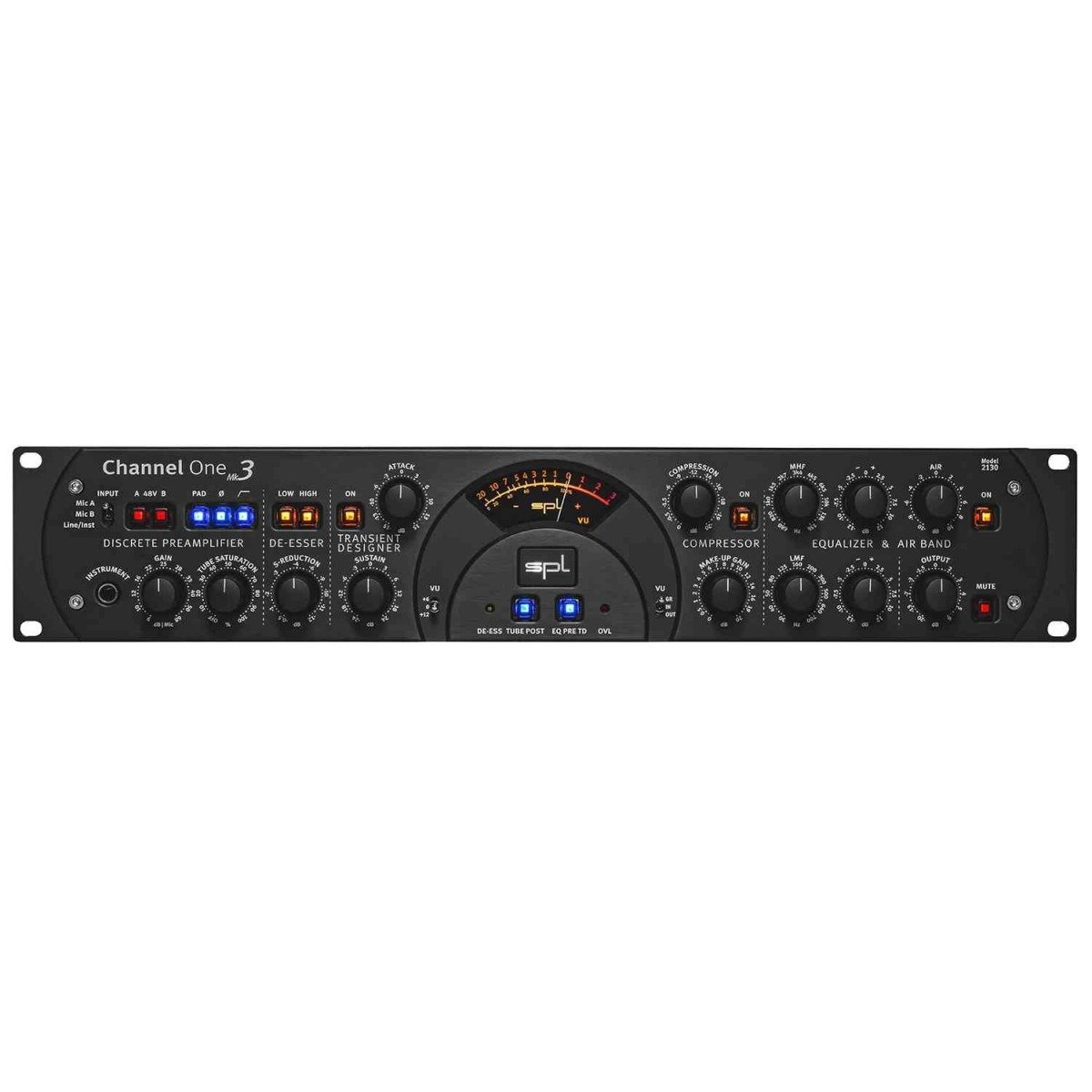
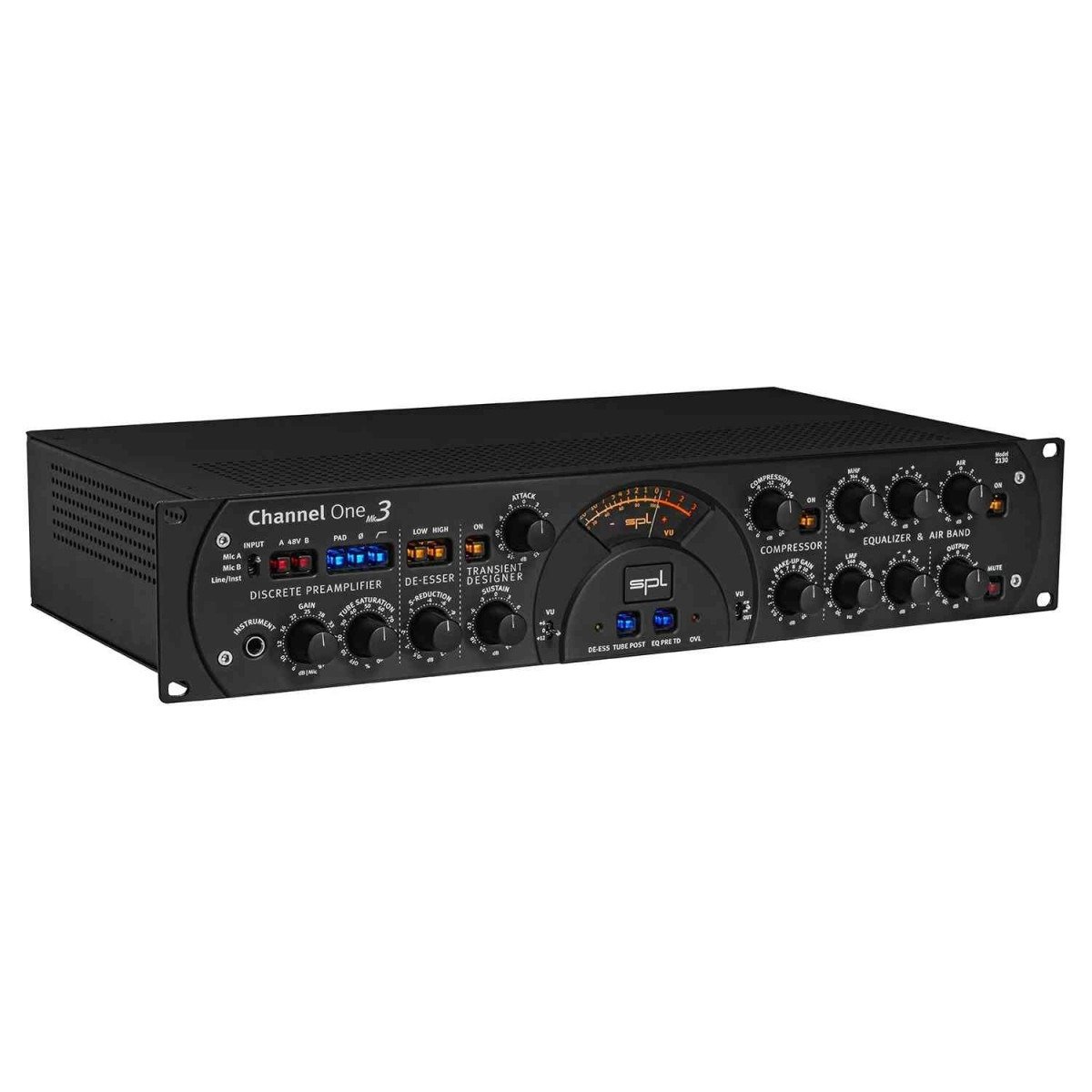
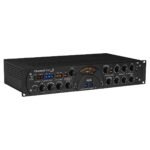
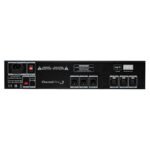
For over 20 years, Channel One has been a synonym for a high-quality and extremely musical recording and mixing channel strip. With the SPL Channel One Mk3 version, this classic has been thoroughly revised and, in addition to a higher internal audio voltage (now ±18 V) for even better, more detailed sound, a further improved preamplifier section, an integrated Transient Designer, a Tube Saturation stage and a Mic A/B comparison option for two microphones and other great features that raise the modern recording and mixing studio to a new level of quality. With de-esser, compressor and equalizer, all the important tools of a real channel strip are still on board. Whether it’s a microphone, line, or instrument signal, the Channel One Mk3 makes any source sound like a professionally recorded signal. This design of the SPL Studio Series perfectly highlights the sonic qualities of this 3rd generation Channel One.
Experience pristine audio clarity and unmatched signal integrity with the SPL Audio Channel One MK3, powered by an internal linear power supply featuring a shielded toroidal transformer. Its precise operating voltages, including a +250 V tube anode voltage and balanced XLR and TRS inputs, ensure exceptional tonal warmth and dynamic range. Discover how this meticulously engineered interface can elevate your studio sound to professional standards.
₹320,095
In stock
In stock
Channel One Mk3 is equipped with one discrete preamplifier. The gain control can be used to adjust the preamplification. For microphone signals, a preamplification of up to 68 dB can be realized – so even really demanding microphones can show their qualities. The control range for line signals ranges between -20 dB and +16 dB. The control range for instrument signals ranges between -6 dB and +30 dB.
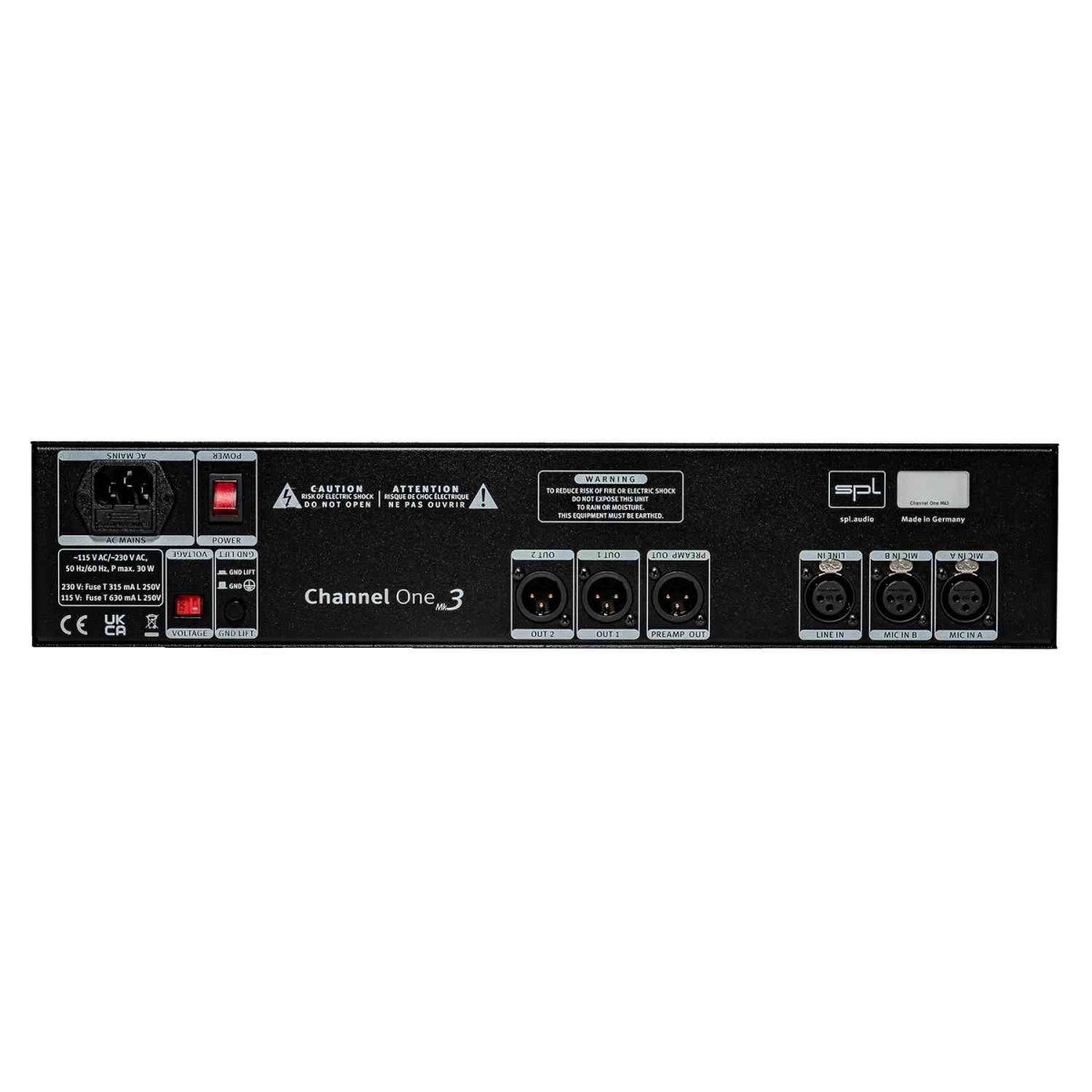
The Preamp Out picks up the signal directly after the microphone amplifier. This signal can also be recorded on a separate track in the DAW, for example, to be on the safe side. If it is noticed after a recording session that the singer was a little louder in the perfect take and therefore hits the compressor too hard, this incorrect setting can still be changed afterwards. The signal recorded for safety can later be played back into the Channel One Mk3 via the Line In and be processed there with Tube Saturation, Compressor or other tools.
With this control the amount of tube saturation can be determined. The output level is accommodated automatically, in extreme settings the level increases by only 6 dB. Therefore decent to expressive harmonic distortions can be easily dialed in by turning just one knob.
Saturation effects are generated through the tube being pushed to and beyond its normal operating limits. In contrast to semiconductors, a tube thus pushed to such levels does not clip from a certain level, approaching more gradually its level limits and thereby producing its typical tonal result, which in audio signal processing can have such often profitable aural effects — on one hand (and depending on the amount applied), from subtle to extensive harmonic distortion and on the other hand, a compaction of the sonic event, that is, a limiting effect that exhibits a pleasant, rounded or soft sound. Acoustically and also in its range of applications this can be compared very well with tape saturation effects.
Unobtrusively and effectively, the Auto-Dynamic De-Esser removes distracting S‑sounds, in a mix or on vocal tracks, by detecting only the S‑frequencies, mixing them back into the main signal phase-inverted, and thus simply deleting sibilants in the original signal. The Auto-Threshold control maintains constant processing even as the singer’s distance from the microphone varies. The result is tonally neutral, unobtrusive and extremely effective. Even at high S‑reduction values, the de‑essing has no significant effect on the character and timbre of the voice.
With the Transient Designer it is possible to manipulate the envelopes of audio signals level-independently (no threshold!). Accelerate or slow down transients, lengthen or shorten sustain times – with just two controls: attack and sustain. All time constants are automated in a musical way and optimize themselves adaptively according to the characteristics of the input signal.
The compressor is also extremely easy to operate with one knob only; its strength lies in its unobtrusive, musical operation. The Compression control can be used to set a threshold between 0 dB and -20 dB. The lower the threshold, the more the compressor works.
The Make-Up Gain control can be used to make up for the overall level reduction caused by compression. A value between 0 dB and 20 dB can be set by which the level is increased again after compression. With the help of the Gain Reduction display on the panel, the adjustment is very simple: if the maximum reduction value caused by the loudest part is e.g. -9 dB, the Make-Up Gain control should be set to values around +9 dB.
The center frequency of the half-parametric bass filter is set with the LMF control (low/mid frequencies). The adjustable frequency range is between 30 Hz and 700 Hz so that this filter covers a range of about 4.5 octaves, allowing it to be used from the deepest bass to the lower mid range.
The center frequency of the semi-parametric mid/high frequency filter is set with the MHF control. (MHF: mid/high frequencies). The frequency range can be set between 680 Hz and 15 kHz so that this filter covers a range of 4.5 octaves and can be equally employed in the lower mid as well as the high range.
The SPL Audio Channel One MK3 is designed for audio professionals and enthusiasts who demand uncompromising sound quality and precision in their recordings and productions. Whether you are a recording engineer, producer, or musician, this high-end audio interface offers the clarity, reliability, and tonal purity essential for capturing the true essence of your sound sources. If your goal is to achieve studio-quality audio with warmth and detail, the Channel One MK3 delivers a sonic experience that elevates your work to a professional standard.
One of the standout features of the Channel One MK3 is its internal linear power supply equipped with a shielded toroidal transformer. Unlike typical switching power supplies, this design eliminates electromagnetic interference and noise, which means you get a cleaner, more transparent audio signal. For you, the customer, this results in recordings that are free from hum, buzz, or any unwanted artifacts, preserving the natural character of your audio. The dedicated operating voltages, including +/-15 V for analog audio and +250 V for tube anode voltage, ensure that the circuitry operates within optimal parameters, providing consistent performance and dynamic headroom crucial for capturing detailed sound.
The Channel One MK3 also features high-quality analog inputs and outputs with both XLR and TRS jack connectors, offering flexible connectivity options for various studio setups. The maximum input gain of 21.5 dBu for microphones and 14 dBu for instruments allows you to handle a wide range of signal levels without distortion. With an input impedance of 20 kΩ for line-level sources and 1 MΩ for instruments, this preamplifier ensures accurate signal transfer and preserves tonal integrity, whether you are connecting dynamic microphones, condenser mics, or guitars. The low 100 Ω output impedance guarantees solid compatibility with downstream equipment such as mixers, compressors, or audio interfaces, maintaining signal clarity throughout your signal chain.
The frequency response of the Channel One MK3 spans an impressive 10 Hz to 100 kHz (-3 dB), extending well beyond the audible range. This wide bandwidth ensures that every nuance of the audio spectrum is faithfully reproduced, from deep bass to shimmering highs. For the user, this means your recordings will have exceptional detail and presence, making the Channel One MK3 an ideal choice for critical listening, mixing, and mastering applications where sonic accuracy is paramount.
Practically speaking, the Channel One MK3 supports selectable mains voltages of 230 V AC at 50 Hz and 115 V AC at 60 Hz, making it compatible with power standards worldwide. It also features appropriate fuses for safe operation, rated at T 315 mA for 230 V and T 630 mA for 115 V configurations. With a maximum power consumption of just 20 watts, this unit balances high performance with energy efficiency, ensuring it fits seamlessly into professional studio environments without excessive heat or noise.
In real-world use, the SPL Audio Channel One MK3 excels as a front-end solution for high-fidelity recording sessions. Its tube-based circuitry adds warm harmonic richness without compromising transparency, making it perfect for vocals, acoustic instruments, and electric guitars. Whether you are tracking a vocal performance, recording a guitar amplifier, or capturing delicate orchestral instruments, the Channel One MK3 ensures that every detail is preserved with clarity and musicality. Its robust build and versatile connectivity make it a reliable workhorse for studios of all sizes.
In conclusion, the SPL Audio Channel One MK3 is an investment in superior sound quality and professional-grade reliability. Its advanced power supply design, flexible inputs and outputs, and extended frequency response combine to deliver pristine audio performance that meets the exacting standards of audio professionals worldwide. If you seek to enhance your recordings with warmth, clarity, and precision, this audio interface is engineered to exceed your expectations and become an indispensable part of your studio setup.
| Internal Linear Power Supply with Shielded Toroidal Transformer | Operating voltage for analog audio : +/- 15 V |
|---|---|
| Mains Power Supply | Mains voltage (selectable) : 230 V AC / 50; 115 V AC / 60 Hz |
| Analog inputs & output; XLR & TRS Jack (balanced) | Maximum input gain (Mic) : 21.5 dBu |